Tell us about the job
Takes about a minute. No obligation.
Sizing a boiler for Hood River County means sizing it for a workload that leaves almost no margin. Homes in Hood River County, OR run heat about ten months a year, from September through June. A burner and heat exchanger that cycle through that kind of extended season accumulate stress on ignition components, seals, and the heat exchanger itself at a pace that a loose or rushed install accelerates. Contractors quoting a replacement here work out the actual load the house places on the system before they spec the unit, because a boiler running undersized in this county reaches its limits well ahead of its rated service life.
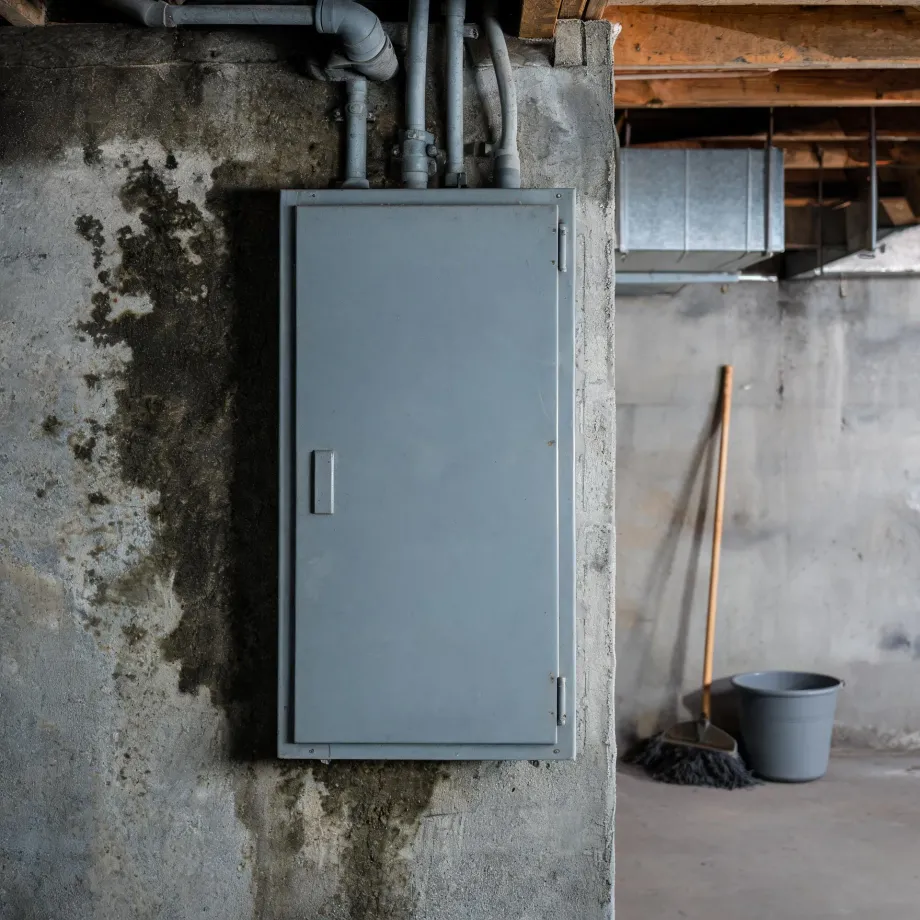
Piping and distribution layout in a house shape a boiler installation more than the unit itself does. Half the homes in Hood River County, Oregon were built in 1984 or earlier (2020-2024 ACS 5-year). A house built around that time was almost certainly fitted for equipment that has long since been replaced, which means the original distribution system was sized and routed for something different from what a contractor is putting in today. What that contractor finds in the walls and mechanical spaces decides whether the job is a straightforward swap or a more involved rework of the heat delivery side.
What a Boiler Installation Puts in Your Home
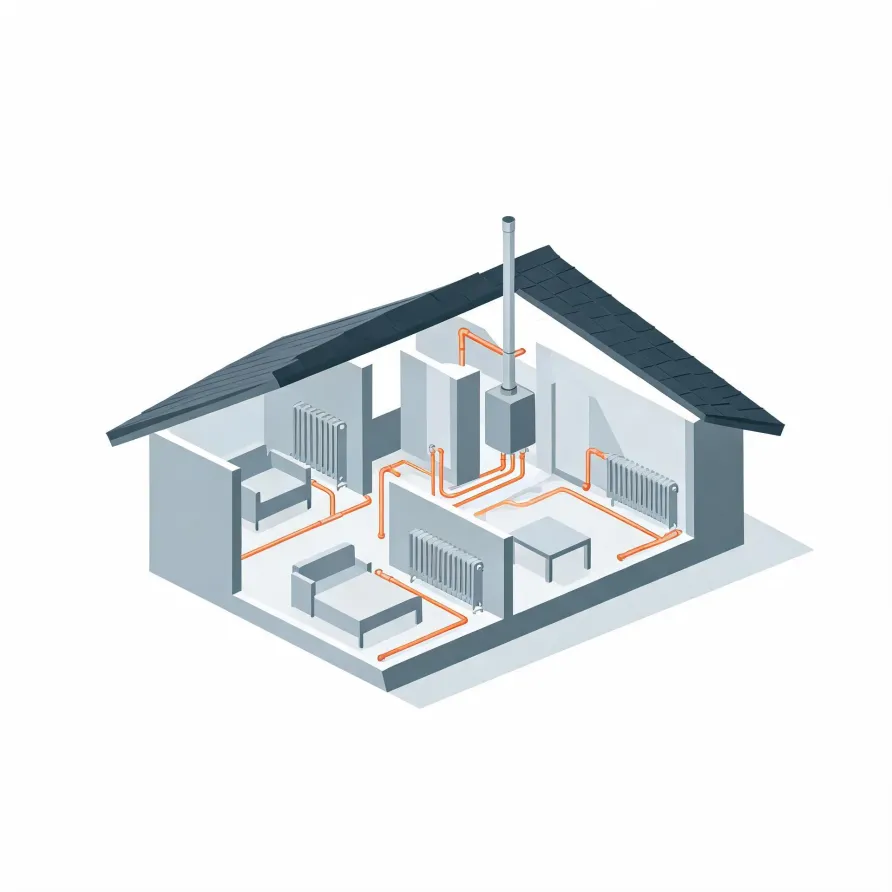
The boiler itself sits in a mechanical room, basement, or utility closet and is the unit that heats water for the whole system. Wall-mounted or floor-standing, it connects to a flue that exits through the roof or an exterior wall to carry combustion gases out. That unit is what a contractor sources, positions, and ties into the rest of the system.
From the boiler, supply and return piping runs through the house to the heat emitters, which are either radiators standing against the walls in each room or radiant loops set into the floor. A circulator pump, mounted close to the boiler, moves the heated water through those pipes and back again. An expansion tank and a pressure relief valve sit nearby as well, handling pressure changes as the water heats and cools.
The drawing shows the general layout of a boiler system, and a licensed contractor determines which components and configurations apply to your specific home.
Get matched in Hood River CountyHood River County, by the numbers
44 severe weather events were recorded in Hood River County, Oregon between 2015 and 2024.
NOAA National Centers for Environmental Information, Storm Events Database, bulk CSV export, events 2015-01-01 through 2024-12-31.Half the homes in Hood River County, Oregon were built in 1984 or earlier (2020-2024 ACS 5-year).
U.S. Census Bureau, 2020-2024 American Community Survey 5-Year EstimatesHood River County, Oregon holds 10,290 housing units (2020-2024 ACS 5-year).
U.S. Census Bureau, 2020-2024 American Community Survey 5-Year EstimatesOwners occupy 69.4% of the occupied homes in Hood River County, Oregon (2020-2024 ACS 5-year).
U.S. Census Bureau, 2020-2024 American Community Survey 5-Year EstimatesCodes & Standards Behind Boiler Work in Hood River County, Oregon2 sourced rules and standards
What Hood River County, Oregon Requires for This Work
Oregon’s contractor licence does not reach casual, minor or inconsequential work on one structure where the person’s contracts total less than $1,000 — and the exemption is unavailable to anyone who advertises or signs themselves as a contractor, at any price.
Oregon requires a current Construction Contractors Board licence, with the right endorsement, to undertake, offer to undertake or bid construction work.
Severe Weather Events in Hood River County
Boiler systems work hardest when the weather outside puts real pressure on a home's heating load. How often that pressure arrives in Hood River County shapes what a boiler installation here needs to handle over its lifetime.
44 severe weather events, 2015–2024. Source: NOAA National Centers for Environmental Information, Storm Events Database.