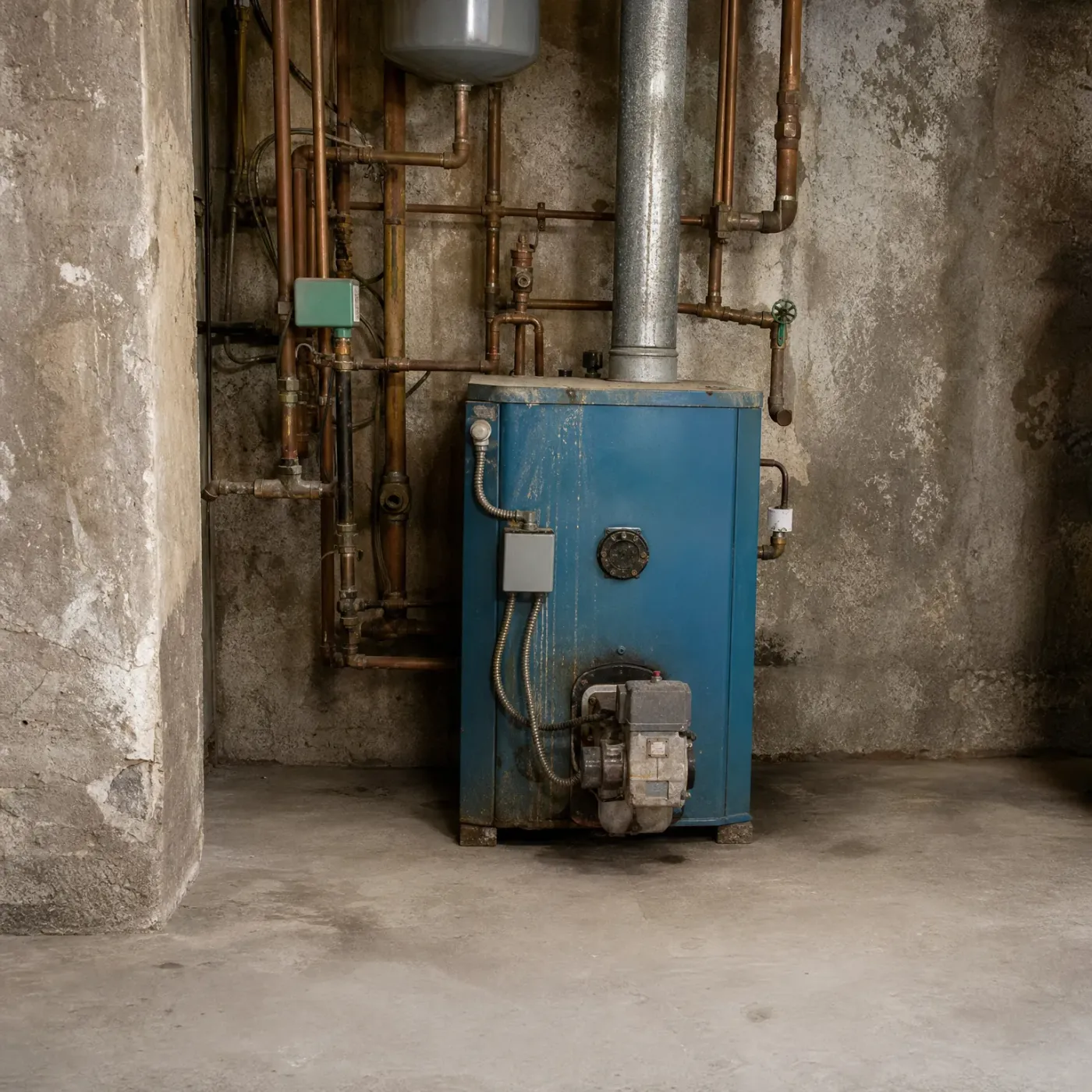
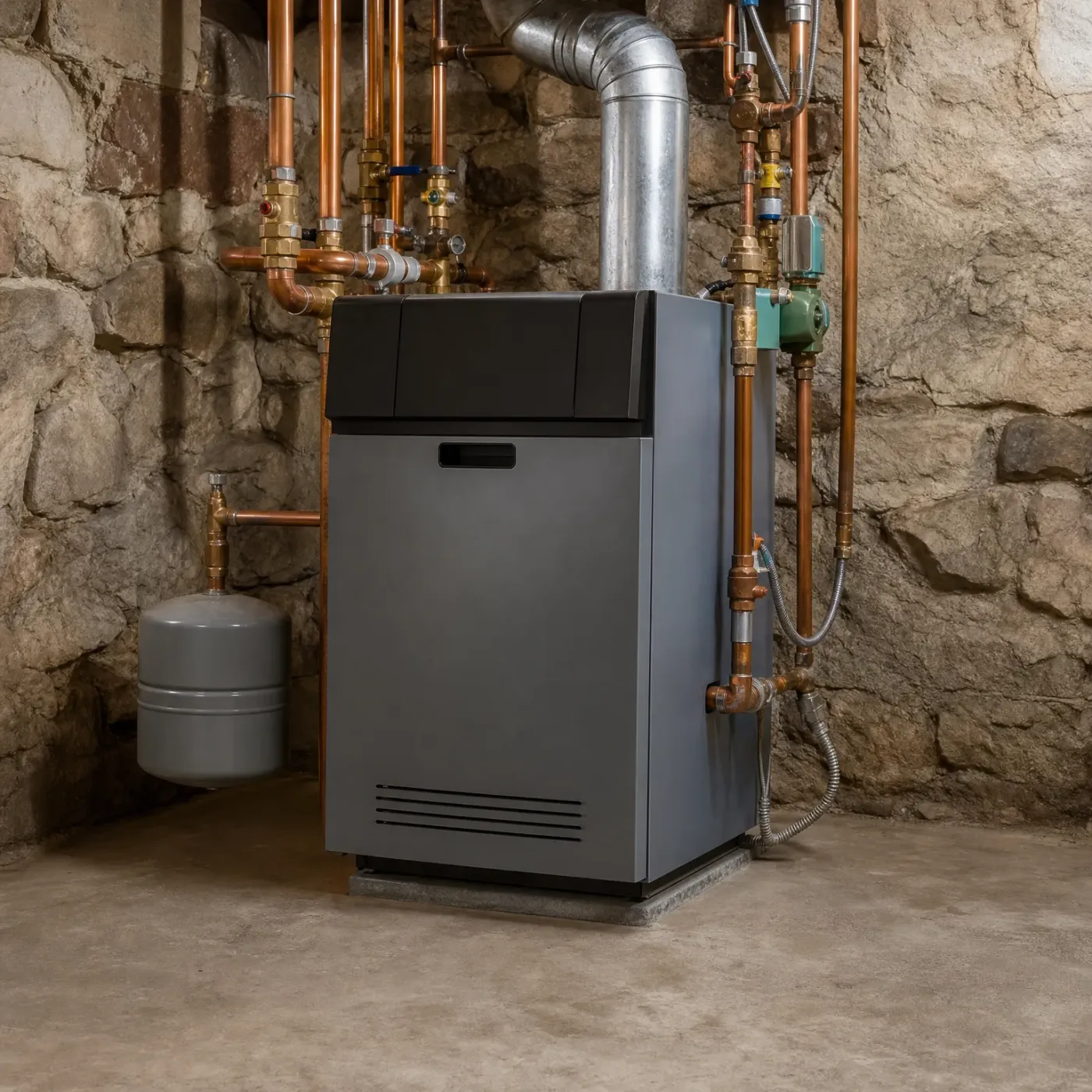
Water stays inside the boiler in a closed loop. The burner heats it, then it travels out to radiators or baseboard units and comes back to be heated again. None of that water is the water running from your taps.
The aquastat is what decides when the burner fires. It reads the water temperature and kicks the burner on when the loop cools past a set point, then shuts it off once it's back up to range. A circulator pump is what actually gets the water moving through the pipes. If that pump goes out, the burner can still run fine, it just won't send any heat to the rooms.
As the water heats it expands, and the expansion tank is there to absorb that without letting pressure build too far. A pressure relief valve is the backup if it does climb too high, so a valve that's stuck or dripping isn't something to leave alone. In an older cast iron boiler, sediment can coat the heat exchanger over time, and the burner ends up running longer to put out the same heat.