


Beaver State Boiler
Profile view of a bearded man wearing a black baseball cap and a dark gray T-shirt against a plain light background.

What size boiler an Oregon home needs

Step 1 of 3: Equipment

The right boiler size for your home comes from a heat loss calculation, not from the square footage of the house or the size of the old boiler you're replacing. A contractor works out how much heat your home actually loses on the coldest days, room by room, based on your windows, walls, and layout. A boiler that's too big will short cycle, switching on and off instead of running steady, which wears out parts faster and leaves rooms uneven. One that's too small will run constantly and still not keep up when it's coldest outside. Since most homes in Oregon heat with electricity, your boiler is likely doing some or all of the work of keeping people warm through the cold months here, so getting the size right matters more than guessing low or high and hoping it works out.

A woman with long wavy brown hair in a grey ribbed sweater sits on a couch indoors, looking toward a window, with a potted palm-like plant and fireplace behind her.
A woman with long brown hair wearing a green V-neck top and beige cardigan sits on a light sofa, looking off to the side, with a dining table, lamp and framed picture in the background.
A woman with long dark hair in a cream knit sweater sits on a beige sofa indoors, looking toward a bright window with a houseplant and framed picture in the background.
A woman with long dark hair in a green knit sweater sits on a couch indoors, smiling and looking toward a window with a blurred room behind her.

Getting the size right starts with the coldest day your part of Oregon sees, not the square footage listed on a real estate site. A contractor goes room by room, checking window area, wall area, and door placement, because a room with three windows and a sliding door loses heat faster than one with a single small window, even if both rooms are the same size. Insulation matters just as much. Two homes with the same floor plan can need different size boilers if one has better insulation in the attic or fewer air leaks around the framing. All of this gets added up into a BTU per hour figure, the amount of heat the boiler has to produce to keep up on the coldest night. That number is what decides the size, not what the old boiler was rated for. Go too big and the boiler short cycles, switching on and off faster than it should and wearing down the igniter and heat exchanger. Go too small and it runs nonstop in a cold snap without ever reaching the temperature on the thermostat.

How the right size gets found

  • A Manual J heat loss calculation adds up the heat lost through your walls, windows, roof, and floor on the coldest day your area sees.
  • Oversizing a boiler makes it short cycle, turning on and off in quick bursts that wear out the igniter and heat exchanger faster.
  • An undersized boiler runs constantly during cold snaps and still can't bring the house up to the thermostat setting.
  • The contractor measures each room's windows, doors, and exterior wall area rather than just the total square footage of the house.
  • Insulation levels and air leaks factor into the calculation because two homes of the same size can lose heat at very different rates.
  • The output is measured in BTUs per hour, and that number, not the old boiler's rating, decides what size goes in.
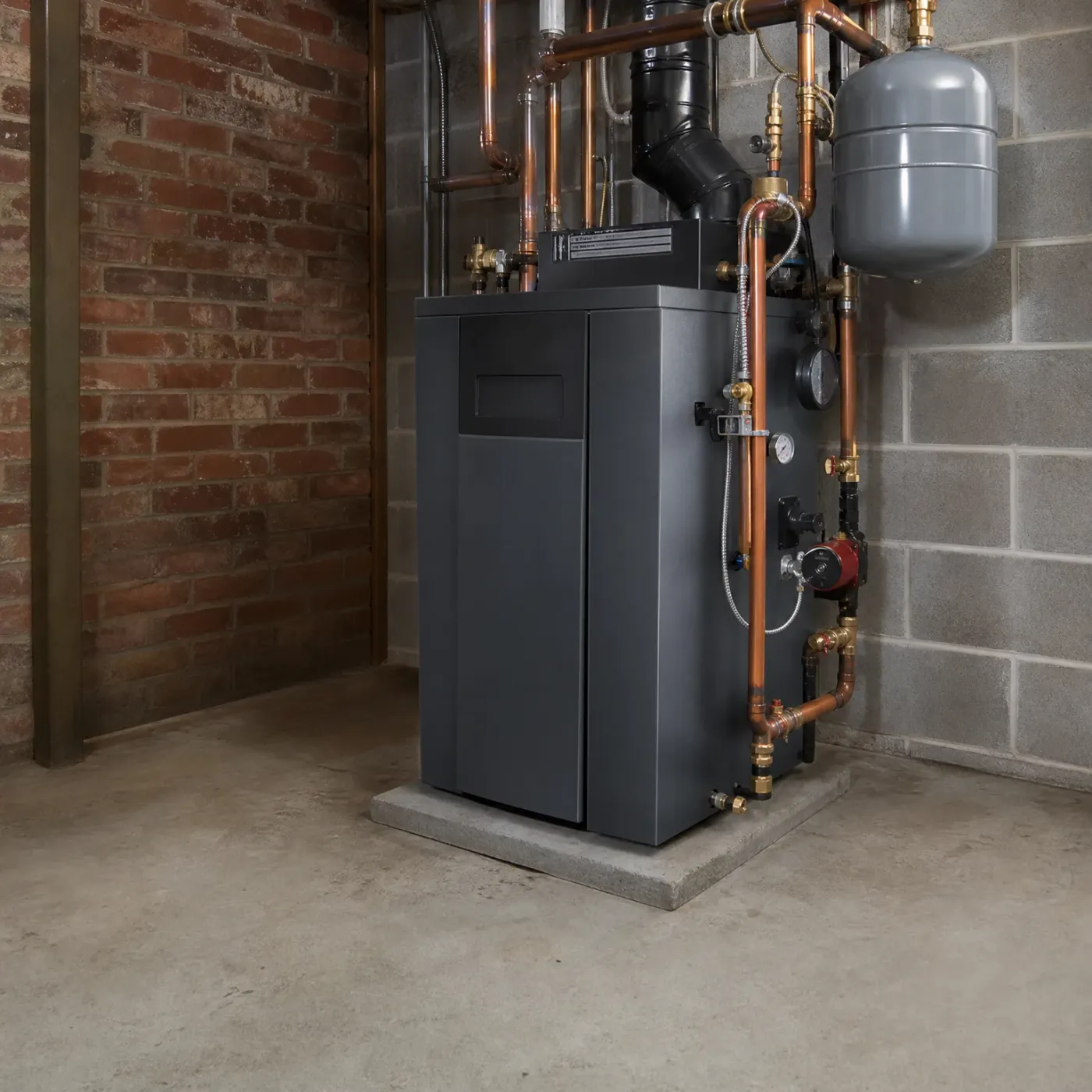
A dark gray floor-standing boiler on a concrete pad in a basement, connected to copper piping, valves, a circulator pump, a gauge, a black flue pipe, and a gray expansion tank, with a brick wall on the left and concrete block wall behind.
A boiler sized to your home's heat loss holds steady water temperature and runs in long, even cycles through the pipes and gauges you see here.
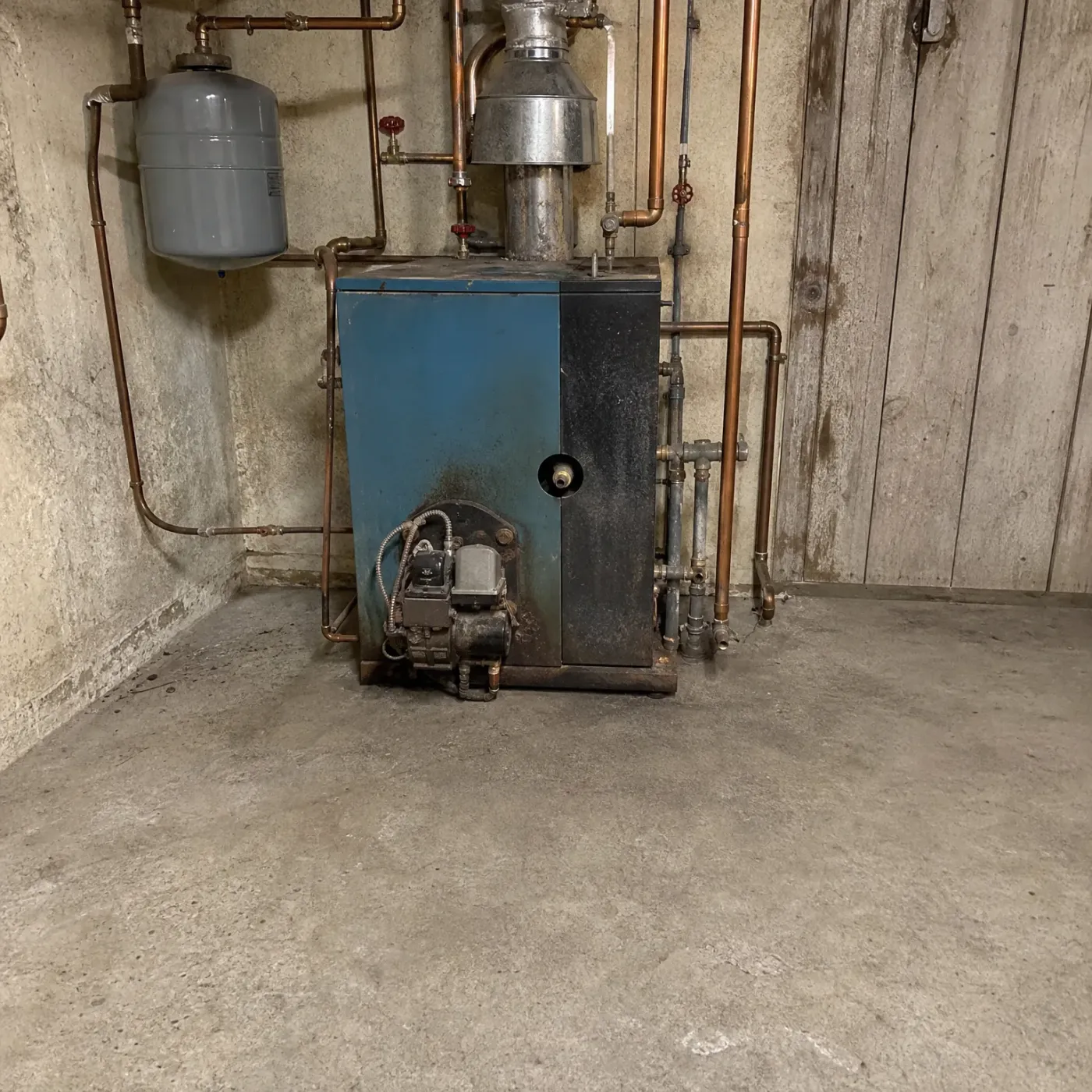
A blue and black boiler with a burner unit, flue, expansion tank and copper and steel piping stands on a concrete basement floor against a concrete wall and wooden plank partition.
A boiler sized off the old unit or a square footage guess struggles to keep up, short cycling and pushing some rooms colder than others.

What the wrong size costs you

  • A boiler that's too big for your home will heat the house fast, then shut off, leaving rooms uneven room to room.
  • Short cycling pushes your electric bill higher even though the boiler isn't running longer, just more often.
  • Oversized boilers wear out their parts sooner, since the igniter and heat exchanger take more stress with every start.
  • An undersized boiler runs long stretches on the coldest Oregon mornings and still can't bring the house up to temperature.
  • A boiler sized to your actual heat loss keeps bedrooms and living spaces at an even temperature through the winter.
  • Getting the size wrong now means living with uneven heat or a higher bill for as long as that boiler's in the house.

You'll feel a mis-sized boiler before you understand why it's happening. The room with the baby's crib stays cold while the living room overheats, because an oversized boiler blasts heat fast and shuts off before it ever evens out through the house. Then it fires up again twenty minutes later. That cycling is where the money goes. An electric boiler that short cycles isn't running longer hours, it's running more of them, and in Oregon, where most homes already heat with electricity, that shows up on the bill whether or not the house ever actually feels warm. The parts take the hit too. Every start puts more stress on the igniter and the heat exchanger than a long, steady run would, so an oversized unit tends to need attention sooner than one that was sized right from the start. Go too small and you get the opposite problem: on the coldest mornings, the boiler runs and runs and the house still doesn't reach the temperature on the thermostat. Either way, it's not a one-time inconvenience. It's how the house feels every winter for as long as that boiler is in it, and it's the kind of problem that's a lot cheaper to avoid at installation than to live with afterward.

An older woman with gray hair in a bun and glasses, wearing a beige knit sweater, smiles while looking to the side in a warmly lit kitchen, with a loaf of bread on the counter in the foreground and a snowy scene outside the window.
A woman and a sleeping child wrapped together in a cream knitted blanket on a couch, with a potted plant, framed photo and lit lamp in the background.

A boiler pro near you

Most homes in Oregon heat with electricity, and a boiler sized wrong against an electric rate adds up fast, even at a typical price per kilowatt-hour, because a short-cycling boiler is drawing power every time it fires back up. You already know what the old boiler was rated for, or what the house measures in square feet, but neither number tells a contractor what your walls, windows, and roof actually lose on a cold morning. Getting that right means a Manual J calculation done for your specific house, not a guess carried over from the last install. Finding a contractor who will actually do that math, rather than quoting off the old unit, usually means calls to a handful of companies, explaining the same thing each time, then sitting with quotes that aren't built the same way and can't be compared side by side. Handing that off now means one contractor who works from your home's real heat loss gets in touch, and that part of the work is done.

A dark gray floor-standing boiler in a concrete-walled basement, connected to copper piping, circulator pumps, a gray expansion tank, and a cream-colored storage tank to the left.

Properly sized boiler

This is what a correctly sized boiler looks like running day to day. The pipes and pumps stay quiet, the water heats evenly, and the system holds a steady temperature through the whole house without straining any one part of it.


A gray residential boiler with a metal flue pipe stands in a concrete-block basement corner, surrounded by copper piping, valves and a gray expansion tank.

Undersized or oversized boiler

This is what a mismatched boiler looks like after a season or two of wrong-sized operation. The unit works harder than it should, cycling on and off more than it was built for, and that strain shows up first in the parts connected to it.

How does a contractor figure out what size boiler I need?

You want to know what actually happens when someone comes out to size a boiler for your house. Maybe you've had a contractor before who just looked at the old unit and matched it, or asked your square footage and did some quick math. You're wondering if there's more to it than that, and what the process looks like when it's done right.

A room-by-room heat loss calculation, done on site

A contractor measures each room, checks the windows, the insulation, the walls facing outside, and works out how much heat escapes from each one on the coldest day your area sees. That gets added up room by room, not guessed at from the total square footage. The number that comes out of this, called the heat loss, tells the contractor what size boiler to put in. It accounts for how your specific house holds heat, not a general rule of thumb. Since most Oregon homes heat with electricity, getting this number right matters for keeping your electric bill from running higher than it needs to, and for keeping the house evenly warm room to room.

A gray boiler with a metal flue pipe stands in a basement against concrete and concrete-block walls, connected to copper piping, a circulator pump, and two gray expansion tanks.

Running right

This is a boiler sized to the house it's heating. The copper lines, the gauges, the expansion tanks all stay under even pressure because the boiler isn't fighting to catch up or shutting off too soon. It just runs.

A gray boiler on a concrete pad in a basement with painted concrete block walls, copper piping, a metal flue, and electrical control boxes.

Running wrong

An old boiler crammed into a corner on a concrete pad, connected to flue pipe and a control box that may have been sized for a different system entirely. If it was matched to the unit before it rather than to a heat loss calculation, it's likely fighting the same battle.

Winter nights average 32°F statewide

On a typical winter night here, the temperature outside sits around 32°F. That's the load your boiler is actually sized against, not a single cold snap but the steady overnight pull all season. Get that sizing wrong and the boiler is fighting those nights for months.

NOAA nClimDiv 1991-2020 county normals weighted by homes

What an undersized boiler does

A boiler sized too small for your home's heat loss runs flat out and still can't get the house to temperature on a cold night. It doesn't short cycle like an oversized one does. It just runs long and loses ground, especially in the rooms farthest from it. You end up supplementing with space heaters or layering up indoors, and the boiler keeps grinding away trying to close a gap it was never built to close. Over time that constant full-load running wears on the pump and the heat exchanger just as much as short cycling does, only slower.

Why the calculation beats a guess

Square footage alone doesn't tell a contractor how a home loses heat. Two houses the same size can lose heat at different rates depending on how much window area faces the weather, how the rooms are laid out, and how the floors and roof are built. A Manual J calculation accounts for that room by room instead of treating the house as one number. That's why matching the old boiler's size, or guessing off square footage, misses as often as it does. The calculation is the only method that ties the new boiler to what your specific home actually needs on its coldest nights.

A blue oil-fired boiler with a burner unit sits on a concrete pad in a basement corner, with copper piping, valves and a gray expansion tank overhead against concrete block walls.
Before you get your boiler installation
A gray boiler unit on a concrete pad in a basement corner, connected to copper piping, valves and a metal flue against painted concrete block walls.
After you get your boiler installation
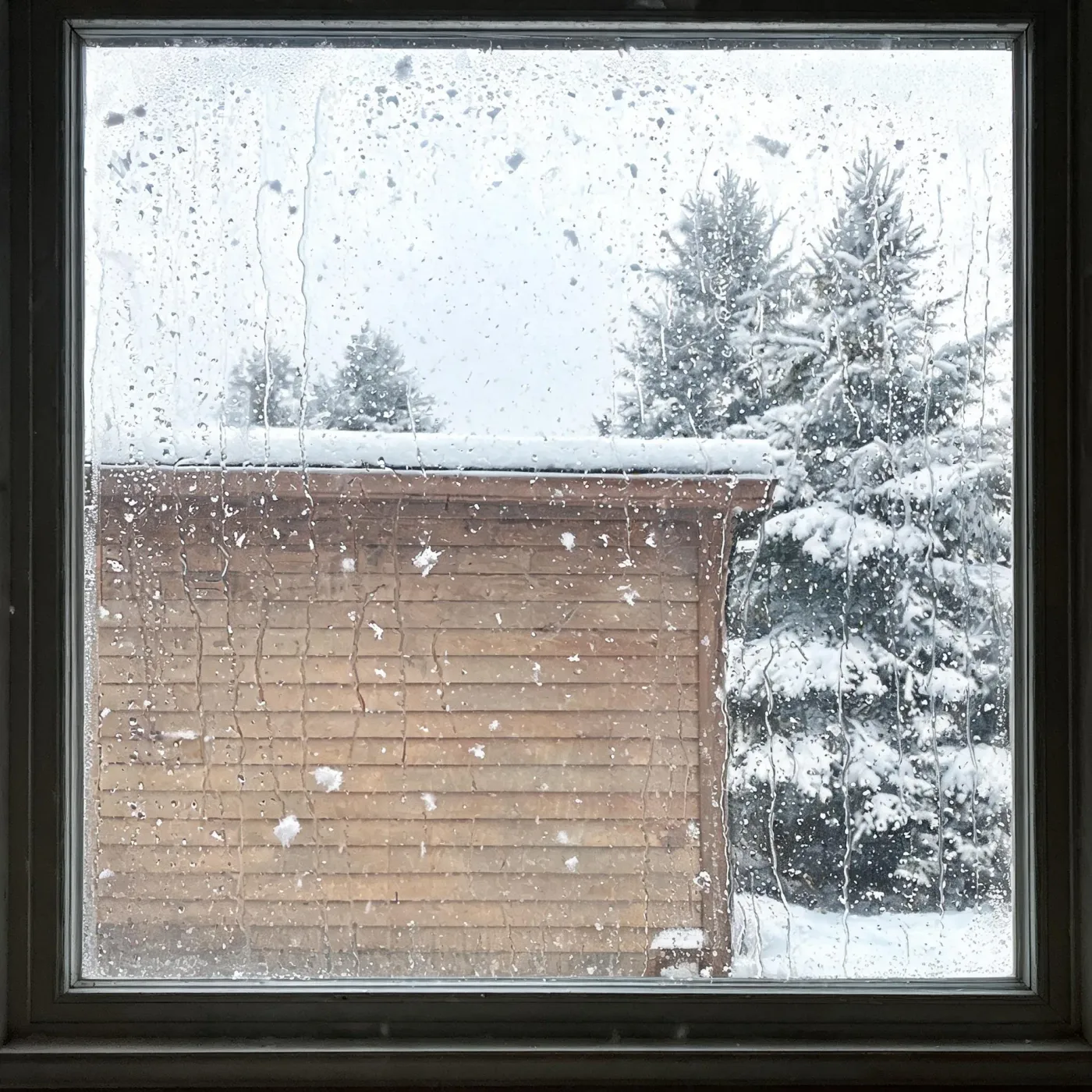
View through a condensation- and droplet-covered window pane of a snow-covered wood-sided building roof and snow-laden evergreen trees under an overcast sky.

Winter nights average 32°F statewide, per NOAA. That's not a deep freeze, but it's a steady, all-night draw on a boiler that has to hold every room at temperature while the air outside sits right at freezing for hours. A boiler sized to your home's heat loss handles that without strain, cycling on, holding steady, cycling off. One sized wrong keeps firing against that same 32°F pull, short cycling or running flat out, and you'll feel it as a room that never quite gets warm or a system that seems to run all night.

NOAA nClimDiv 1991-2020 county normals weighted by homes

A smiling man in a denim shirt and white t-shirt stands in an open dark doorway of a stucco house, facing a woman with long brown hair and a green jacket seen from behind in the foreground.

The right size comes from your home, not a guess

A heat loss calculation is what gets you the right boiler. Not the old unit's size, not the square footage, but the actual number your home loses on a 32°F night. That's the whole answer this page came to give you.

What you're left with now is finding someone who'll actually do that calculation instead of eyeballing the old boiler and writing up a quote. That part is the slow part, calling around, explaining your house more than once, sorting through quotes that all claim to be right. Getting matched with a contractor who sizes it properly and reaches out to you directly skips that step entirely.

Interior corner of a room with a window and sheer curtain at left, a gray upholstered sofa with a cushion at right, and a round wooden table holding stacked books and a round vase with an olive branch.
Sunlight falls across a beige upholstered sofa with a textured woven cushion and a chunky knit throw, beside a dark wood cabinet holding a ceramic vase with green leafy branches, near a white-framed window.
A sunlit corner of a room with a wooden side table holding a ceramic vase of green foliage and a wooden bowl, beside a light upholstered sofa with a knit throw and rust-colored pillow, with window shadows cast on a beige wall.
A sunlit room corner with beige walls, a white-framed window with sheer cream curtain, wood floor with a light rug, and a woven basket holding a knit blanket.
A beige ceramic vase holding a leafy green branch sits on a wooden cabinet in a corner, with sunlight through a sheer curtain casting leaf shadows on the wall.
A grey upholstered sofa with a rust-orange velvet cushion and a textured throw sits beside a window with linen curtains, next to a wooden side table holding a pale ceramic vase of olive branches.

A local pro for your boiler installation

One form replaces the calls you'd make to find a boiler pro.

Answer a few questions

It costs nothing to send, and you don't have to hire anyone.