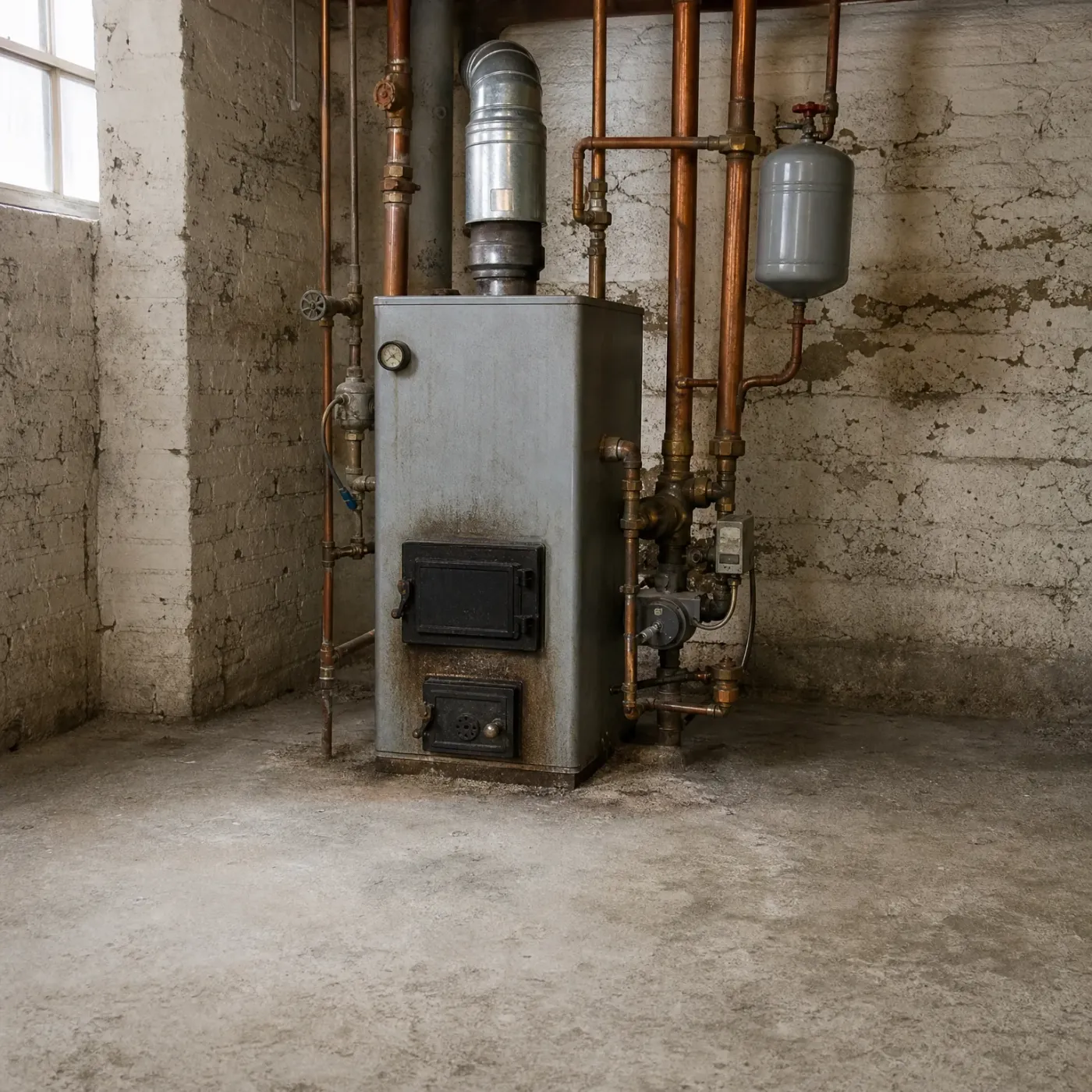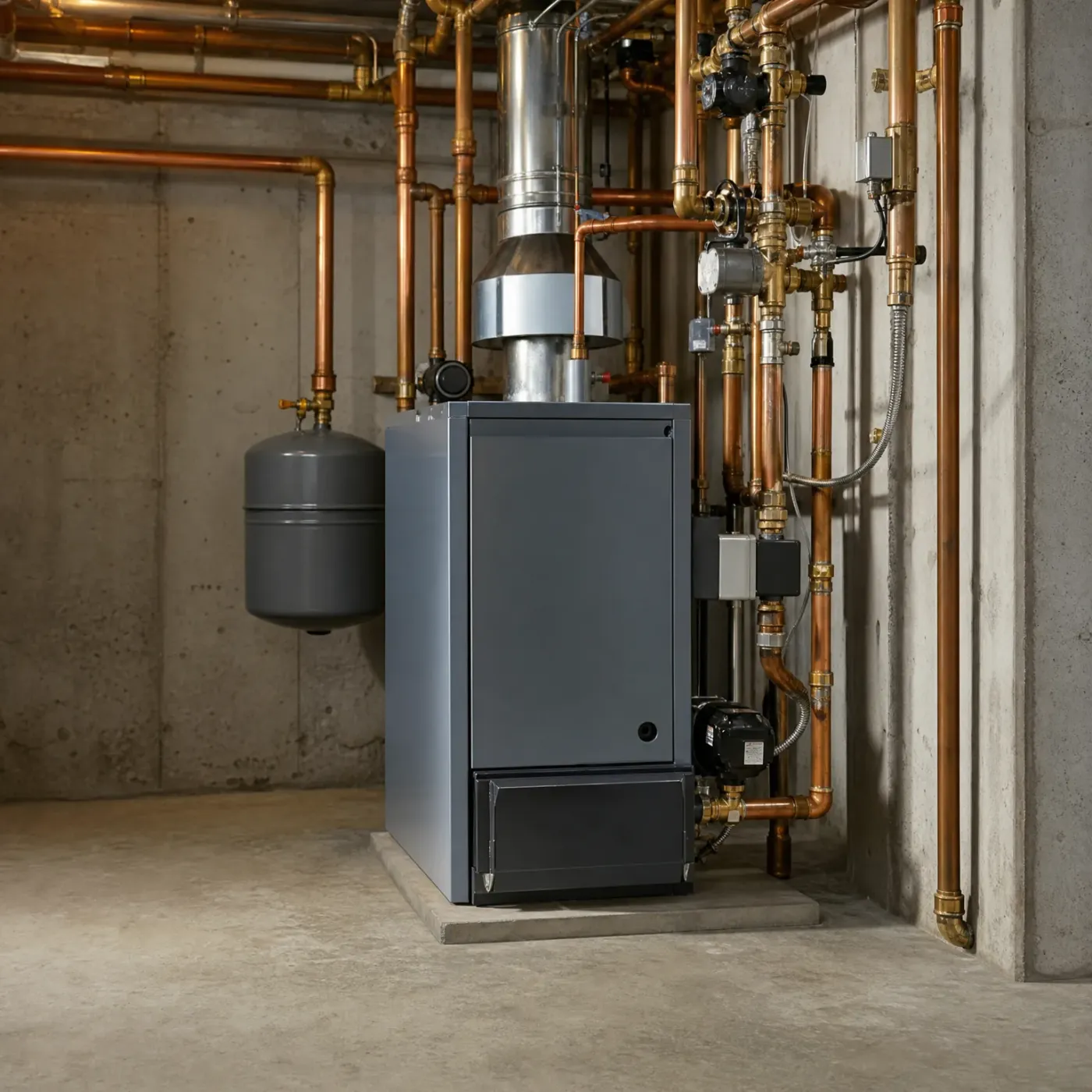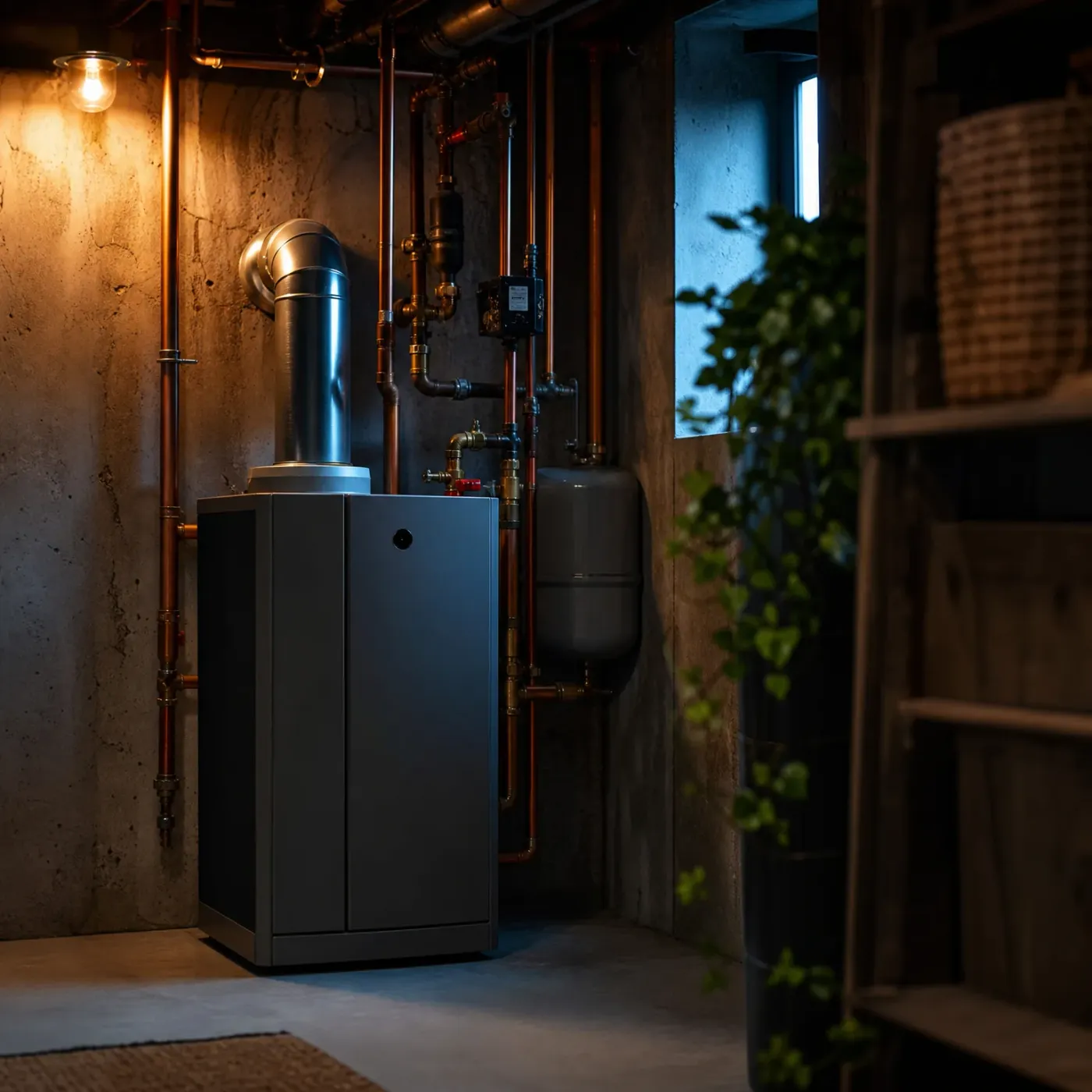
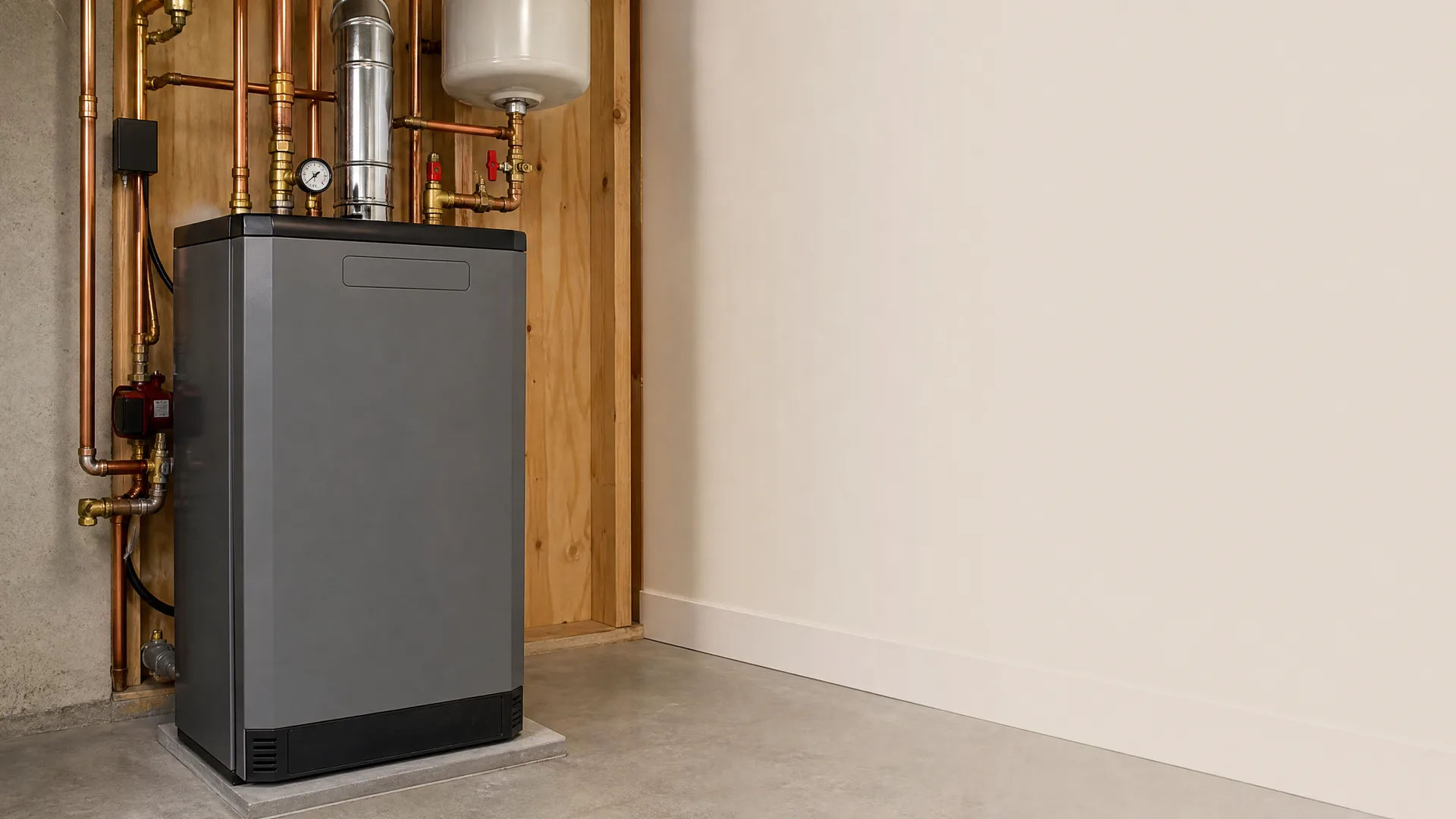
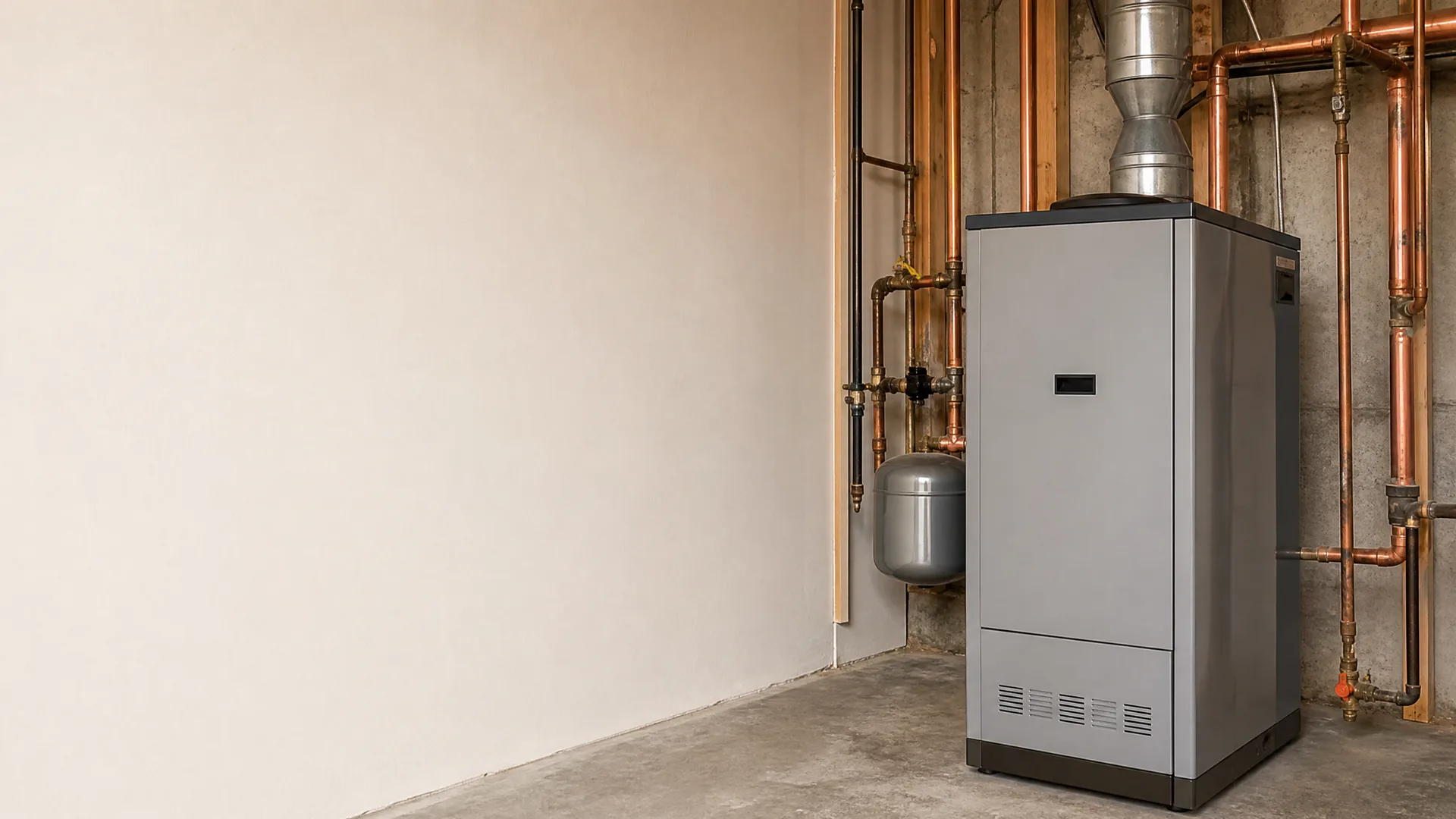







A dark grey floor-standing boiler with a metal flue stands against a concrete basement wall, surrounded by copper pipework, valves and a wall-mounted expansion tank, with ivy and a shelving unit at right.

A pro who works on boilers

What your boiler pressure should be in Oregon

Most boilers want to see somewhere between 12 and 15 psi when the system is cold, with the number climbing a bit as the water heats up. Too low and the system can't push water through the radiators or baseboards. Too high and the relief valve may start dripping. This page covers what to check on your gauge and when a reading means something is wrong. If it points to a problem, a local contractor who services boilers regularly can take a look and reach out directly.

Match me with a pro

A cold boiler should read between 12 and 15 psi on the gauge near the bottom of the unit. That range gives the system enough water pressure to push heat through every radiator or baseboard in the house without straining the pump or the pipes. Once the burner fires and the water heats up, the needle will climb a few pounds higher, and that's normal. What isn't normal is a gauge sitting near zero, which usually means the system has lost water somewhere, or a needle pinned above 20, which means too much pressure is building and the relief valve could start letting water out to protect the system. If you keep an eye on that gauge through the year, especially once the weather turns and the boiler starts running more, you'll catch a slow leak or a failing valve before it leaves you without heat.

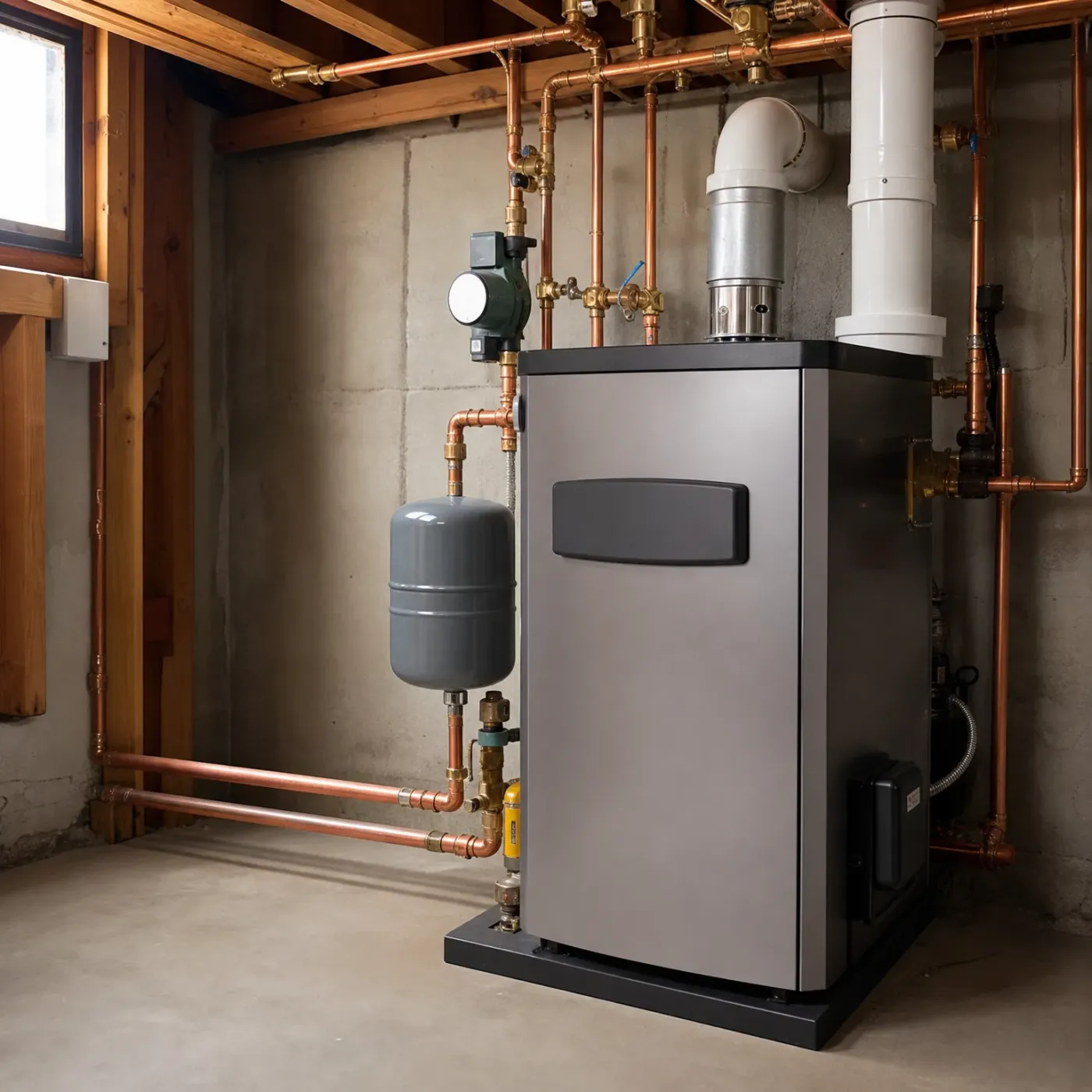
A dark grey floor-standing boiler on a concrete floor in front of a plywood wall, with copper pipes, valves, a pressure gauge, a flue pipe and a white expansion tank above it, beside a plain light-coloured wall.

What the gauge is doing

The pressure gauge sits near the feed valve at the bottom of the boiler. As the burner fires and the water heats, it expands, and the needle climbs a few pounds above where it sat cold. That rise is normal. What matters is where the needle sits before the burner ever kicks on. If it's in range cold, the climb when it's running takes care of itself.

A gray boiler unit with a metal flue pipe stands in a basement corner, surrounded by copper piping and an expansion tank against a plain light wall and concrete floor.

Why low pressure shows up first upstairs

Water has to climb against gravity to reach radiators or baseboards on a second floor, and it needs enough pressure behind it to get there. When the psi drops below 12, the upper floors are usually the first place to go cold, even though the boiler itself is running fine. A pressure reduction or feed valve that isn't holding is often why the number keeps slipping.

A woman in a cream cardigan and jeans stands with one hand raised facing an open front door of a gray horizontal-siding house, with a black lantern wall light, a potted shrub with yellow flowers, and a stone-faced porch column.

If the needle keeps dropping

Most homes here heat with electricity, so the boiler usually isn't the only thing keeping the house warm, but if you've got one, it's doing real work once the weather turns and you'll feel it if the pressure slips. A boiler that keeps losing pressure between checks is losing water somewhere, from a fitting, a valve, or the expansion tank, and that's not something that fixes itself. You'll notice cold spots in a radiator or baseboard before you ever look at the gauge, and by then the system has been running short for a while.

A boiler's pressure is also one of the easier things to check during a maintenance visit, along with the expansion tank and the relief valve, before any of it turns into a bigger repair. A local contractor who services boilers through the winter here has usually seen the same slow leak a dozen times and knows where to look first. If you'd rather have someone familiar with your system come take a look, you can get matched with one contractor near you, not a handful calling at once.

A living room corner with a light beige sofa holding a textured taupe cushion, a large ceramic vase of olive branches by a window, a framed neutral artwork on the wall, and a dark bowl with stacked books in the foreground.
  1. Cold water fills the system through the feed valve first

  2. Gauge should read 12 to 15 psi before firing

  3. Burner fires and the water starts heating up

  4. Heated water expands and pressure climbs a few pounds

A gray-haired bearded man in a dark coat and scarf dusted with snow stands smiling in a dimly lit entryway with a white front door, a side table with a lit lamp, an oval mirror, and a patterned rug.
An older bearded man in a dark snow-dusted coat and gray scarf stands just inside a dimly lit home entry, with a framed picture, lit table lamp, and an adjoining room with a fireplace behind him, and snow visible through the open door.
A gray-haired, bearded man in a dark snow-dusted coat stands smiling in a dimly lit entry hall with a staircase, a lit table lamp, a framed picture, and a living room visible through a doorway.
An older man with gray hair and a beard, wearing a dark jacket dusted with snow, stands smiling in a dimly lit hallway with lamps and a living room visible behind him.
A gray boiler on a black base in a basement with concrete walls, connected to copper piping, a circulator pump, a gray expansion tank, and white and metal flue vent pipes.

Get your boiler to the right pro

Your request stays with one local pro.

A local pro who services boilers gets in touch about the tune-up.

Get a licensed local pro

Asking costs nothing, and the choice to hire stays yours.

Why does my boiler keep losing pressure

You check the gauge and it's sitting under 12, maybe closer to 0. You might notice a radiator that stays cold at the top while the bottom gets warm, or a knocking sound when the burner fires. Some homeowners find a damp spot near the boiler itself, which usually means the relief valve has been letting water out. If the pressure keeps falling and nobody tops it off, the boiler will eventually lock out or stop heating the rooms it used to reach. On a cold Oregon morning that's the difference between a warm house and one that needs a space heater until someone looks at it.

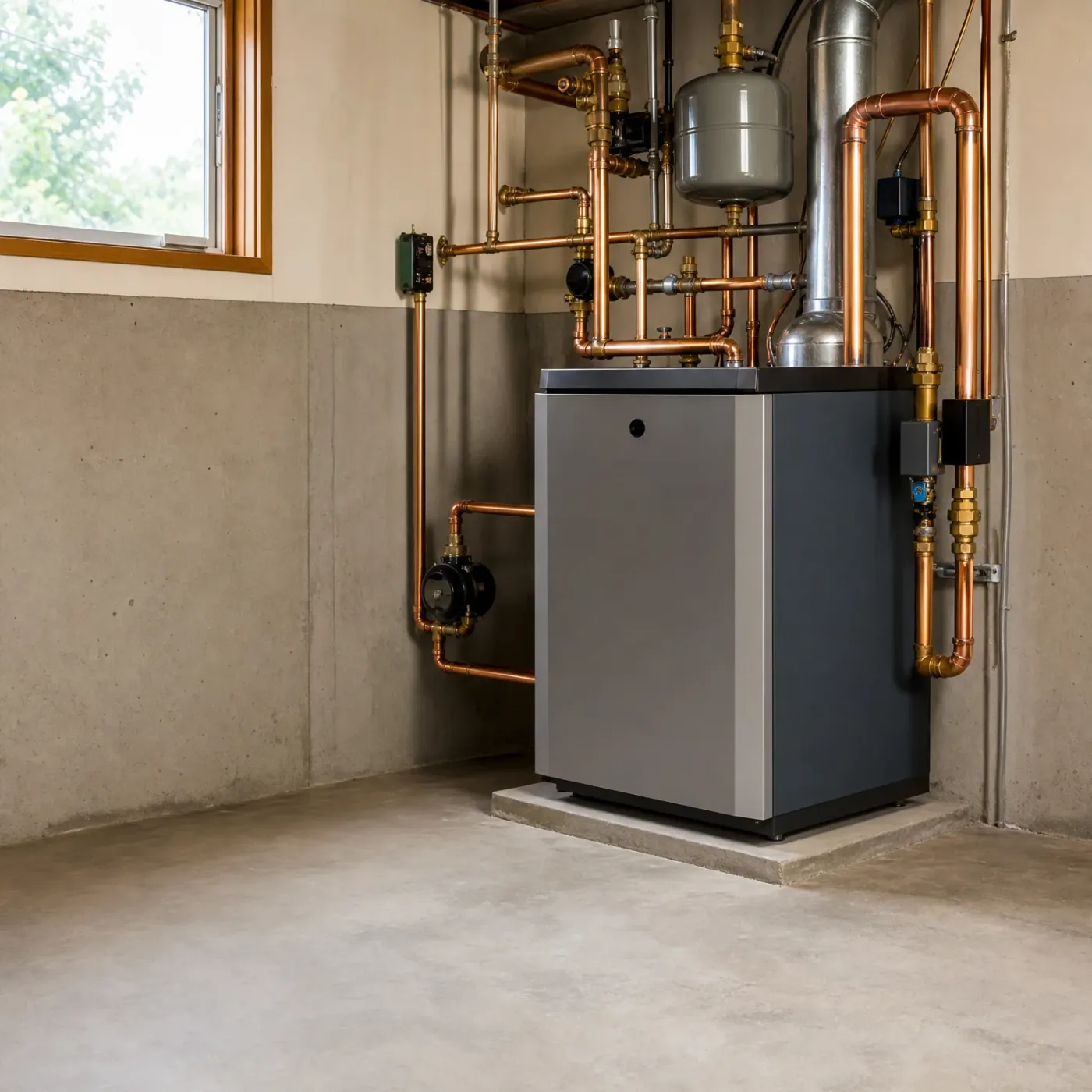
A gray floor-standing boiler on a concrete pad in a basement corner, connected to copper piping, brass valves, a circulator pump, an expansion tank, and a metal flue, with a window at upper left.

Running the way it should

Copper lines feed out clean to the radiators, the circulator pump keeps water moving, and the expansion tank handles the swell as it heats. Gauge sits where it should, no drips at the relief valve, no rust creeping down the fittings.
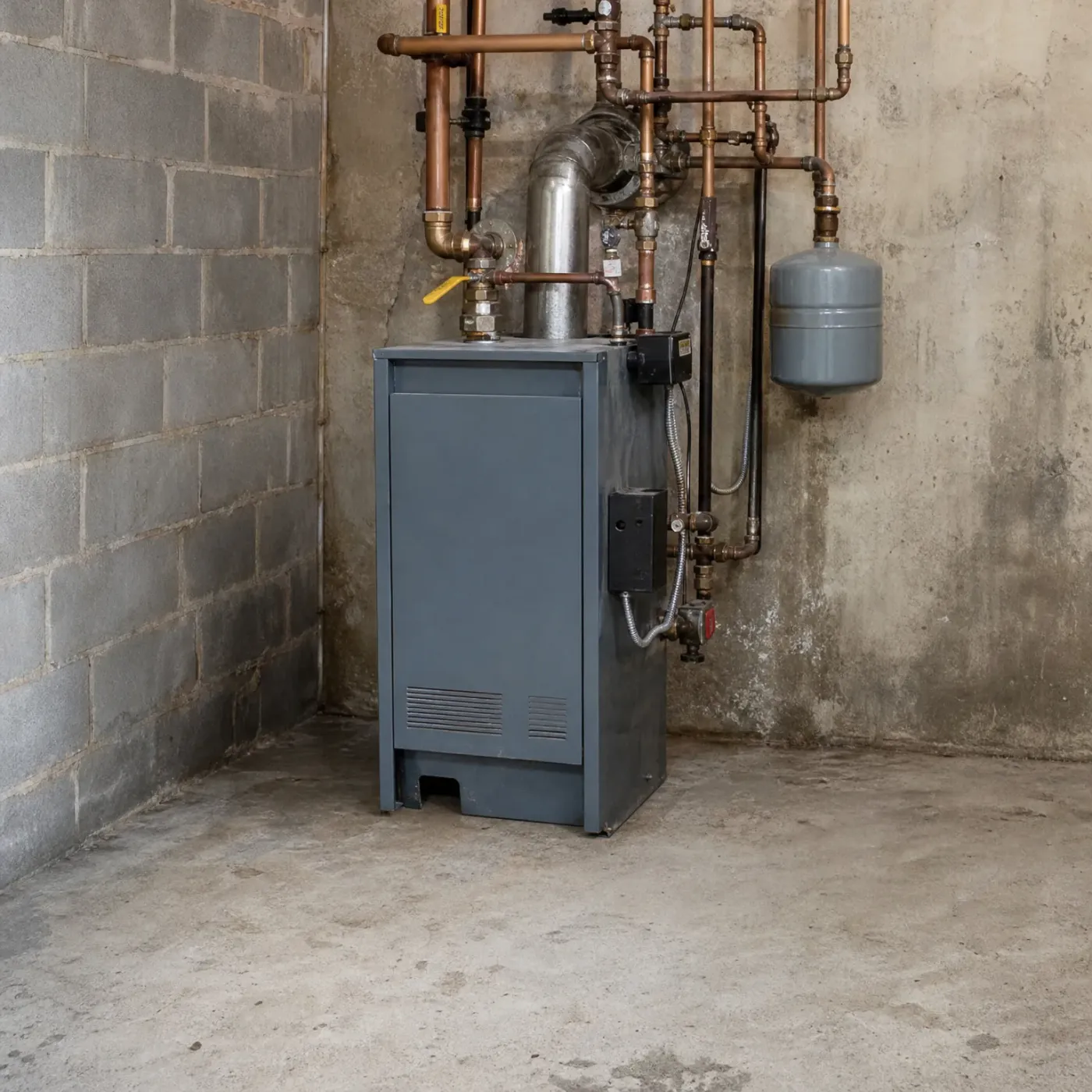

A gray floor-standing boiler in a basement corner with copper and black piping above it, a flue vent, and a gray expansion tank mounted on the concrete wall beside a concrete block wall.

Signs worth a second look

A gray boiler tucked in the corner can still run fine, but check the gauge first. Mineral buildup around a fitting or a damp spot near the expansion tank usually means a slow leak somewhere in that piping.

A woman wrapped in a thick beige fleece blanket sits on a sofa with an open book on her lap, beside a lit table lamp, with a frost-covered window behind her.
A gray-haired woman in a cream knit sweater stands in a dimly lit kitchen at night, looking to her right, with a round loaf of bread in the foreground and a dark window and potted plant behind her.

Pressure in the normal range

The gauge reads between 12 and 15 psi cold, climbs a bit as the burner runs, and settles back down. Nothing to check or fix, but a seasonal look still catches small leaks before they empty the system.

Find my pro

Pressure below 12 psi

A low reading means the system is losing water somewhere, through a valve, a fitting, or the relief valve itself. A local contractor who works on boilers all winter can find where it's going before a radiator stops heating.

Find my pro
An old gray boiler with copper piping, a flue duct, pressure gauge and an expansion tank stands in the corner of a basement with painted masonry walls and a bare concrete floor.
Before you get your boiler maintenance
A gray boiler on a concrete pad in a basement, connected to copper piping, valves, circulator pumps, a metal flue, and a wall-mounted expansion tank.
After you get your boiler maintenance

Winter nights average 32°F statewide

On winter nights here, the outside temperature averages 32°F. Your boiler has to make up that whole difference on its own, and it leans harder on correct pressure to do it. Let it drift below 12 psi on a cold night like that and a radiator or two will run cold while the rest of the house works to keep up.

NOAA nClimDiv 1991-2020 county normals weighted by homes

Where your gauge should sit

  • A cold boiler should read 12 to 15 psi, and that number does not change because you heat your home with electricity instead of gas.
  • If the gauge holds steady in that range all winter, nothing about your boiler needs attention beyond a seasonal look.
  • A boiler that keeps losing pressure usually has a slow leak somewhere in the loop, not a problem that fixes itself.
  • A local contractor who services boilers all season already knows which fittings and valves tend to fail first on systems like yours.
  • Getting matched with one licensed contractor means one person looking at your actual gauge, not a string of calls to sort through.

Twelve to fifteen psi cold. That's the number, and it holds whether the boiler is your main heat or backup to electric baseboard. The gauge near the feed valve will tell you where you stand faster than anything else in the house.

If it's sitting in that range and climbs a few pounds once the burner runs, the system is doing what it's supposed to do. There's nothing to chase. A seasonal look still catches a slow drip at the relief valve or a fitting starting to weep before it becomes a bigger job, but that's maintenance, not a repair call.

If the needle keeps falling below 12, that's water leaving the loop somewhere, and it won't stop on its own. Winters here can be cold enough that a boiler running low on pressure can't push heat to every radiator, and you'll feel that as a cold spot or a knocking sound before you ever look at the gauge.

Finding where the water is going means someone who knows these systems looking at the actual loop, not guessing over the phone. A contractor who works on boilers all season in this area has already seen which valves and fittings tend to give out first, and what a slow leak looks like before it's an obvious one. Getting matched with one licensed contractor local to you means one person looks at your gauge and your pipes, not three different companies calling to schedule a look.

A single-story stucco house at dusk with a lit paver walkway lined by low path lights, desert plants and boulders in front, and distant mountains under an orange and blue sky.

Boiler Maintenance

Matched to your boiler job

Step 1 of 3: Equipment
  • A corner of a room with an upholstered wood-framed armchair holding a floral pillow, a round side table with a ceramic lamp, books and a vase of greenery, a framed landscape painting on the wall, a patterned rug, and a sunlit multi-pane window.
    • A local pro who knows boilers gets your details and gets in touch.
  • Interior corner with a wood-framed window showing green foliage outside, a framed landscape print on a beige wall, and a rounded stone vase of leafy branches on a wooden cabinet.
    • Send the form, and lining up the boiler tune-up stops being yours to chase.
    • Send the form and the boiler tune-up stops being something to remember.
  • A pale ceramic vase holding olive branches sits on a dark wooden countertop beside a carved wooden dough bowl, next to a wood-framed window and a light painted plank wall.
    • Fill out one form instead of calling around for a boiler tune-up.
    • Explain the job once and skip repeating it on every call.
  • A dark wood round side table holding a brass lamp with a cream shade, a blue-and-white patterned bowl, and a white textured pot of greenery, beside an upholstered chair with a gray patterned cushion and a white-framed window showing green trees and flowering shrubs.
    • The pro who reaches out is licensed in Oregon.
    • Only one pro gets your request, so you hear from one company.