Why your boiler is losing pressure in Oregon

Step 1 of 3: Equipment

A boiler loses pressure because water is leaving the system somewhere, or air is getting in where it shouldn't. Most often it's a slow leak, at a valve, a pump seal, or a joint in the pipes, losing enough water over weeks that you only notice when the pressure gauge drops below 1 and the boiler stops firing or runs poorly. Sometimes it's the pressure relief valve letting water out because the expansion vessel has lost its charge and can't absorb the system pressure as the water heats up. Bleeding a radiator can also drop the pressure if nobody tops it back up after. None of these fix themselves, and topping up the pressure without finding the leak just means doing it again in a few weeks. A boiler that keeps losing pressure needs someone to find where the water or air is actually getting through, not just a refill.

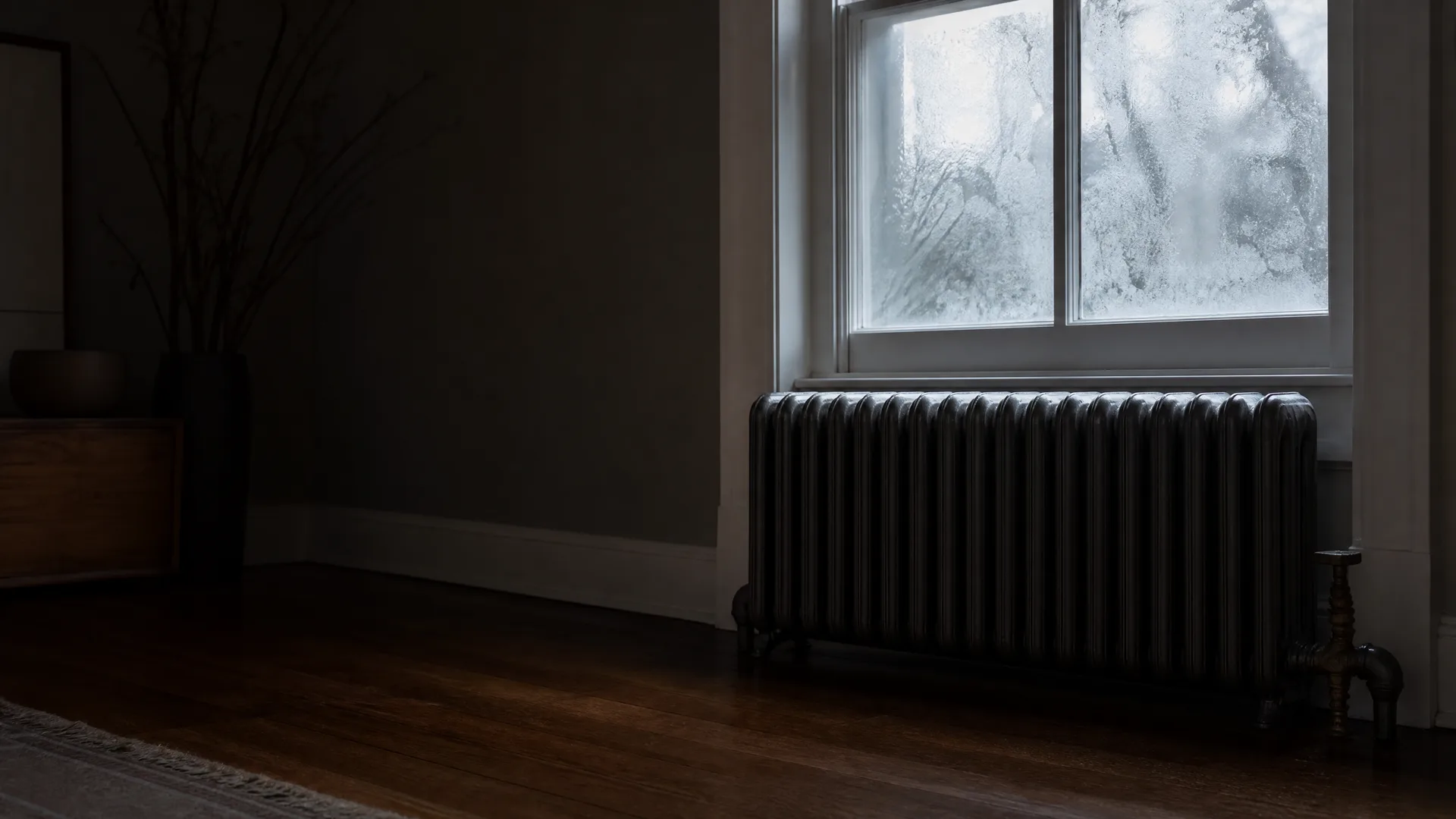
A cast-iron column radiator stands beneath a frosted window in a dim room with dark walls, a wood floor, and a vase of bare branches on a low cabinet at left.

You come downstairs before the heat has caught up and the living room still holds the night's cold. The cast-iron radiator under the window ticks as it tries to warm, but the top half stays cool to the touch. Ice has formed a thin rim on the inside of the glass, the kind that only shows up when it's held near freezing outside for hours. You check the boiler on your way past and the pressure gauge sits below where it should. Nobody touched it. No water on the floor, no damp patch on the wall. Just a radiator doing half its job and a number on a dial that's lower than last week, on a morning when Oregon is cold enough that you notice.

Top It Off or Find the Leak

Bleed and refill yourself

  • Topping off the loop through the filling valve brings the gauge back to the right range in a few minutes.
  • You need to know where your pressure relief valve and filling loop are and how to read the gauge without guessing.
  • If the pressure drops again in a few days, you've only masked a leak that's still there.
  • Refilling too often without finding the cause lets air and mineral deposits build up inside the pipes and the heat exchanger.
  • Doing this wrong, like overfilling or not closing the filling valve all the way, can cause a bigger leak or water damage.
  • It costs you nothing but time, and it buys a little patience while you figure out if the problem is worth calling about.

Have it diagnosed

  • A licensed contractor pressure-tests the system to find exactly where water or air is getting in, rather than guessing.
  • Someone who works on boilers all winter in Oregon knows which valves and seals tend to fail first on the systems common here.
  • One contractor means one visit and one explanation, not several trucks and several different opinions about what's wrong.
  • A proper diagnosis catches a failing pressure relief valve or a cracked expansion vessel before it leaves you without heat on a cold morning.
  • The fix addresses the actual leak or air intrusion, so the pressure holds instead of needing another top-off next week.
  • You avoid calling around and repeating the same description of the problem to five different companies before anyone shows up.
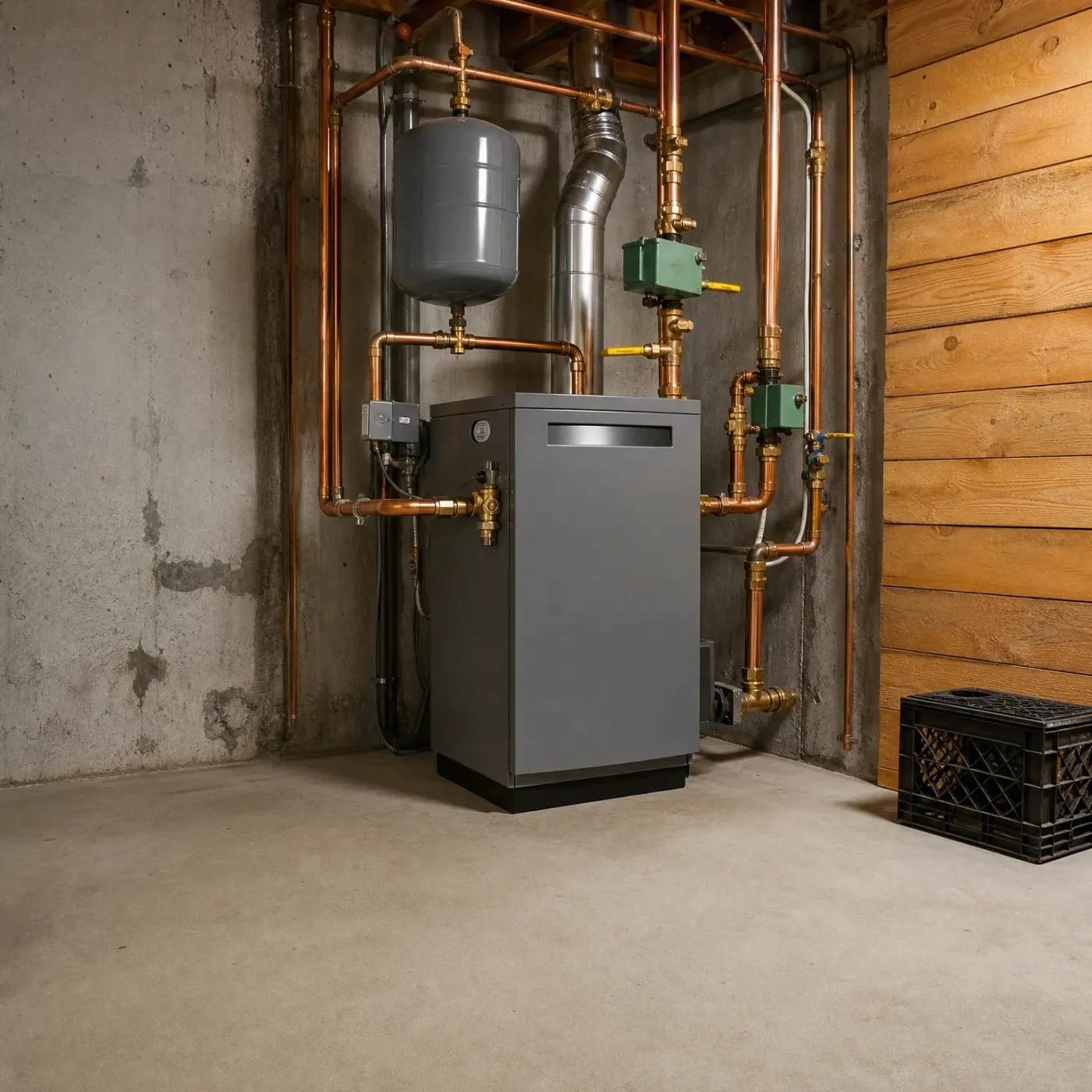
A gray boiler unit in a basement corner with copper piping, brass valves, a gray expansion tank, a metal flue duct, concrete walls and a wood-paneled wall, with a black plastic crate on the floor at right.

Pressure holding steady

The gauge sits where it should, the zone valves open and close on command, and the expansion tank is doing its job absorbing the water as it heats. Copper lines and brass valves show no sign of weeping at the joints. Nothing here calls for attention.

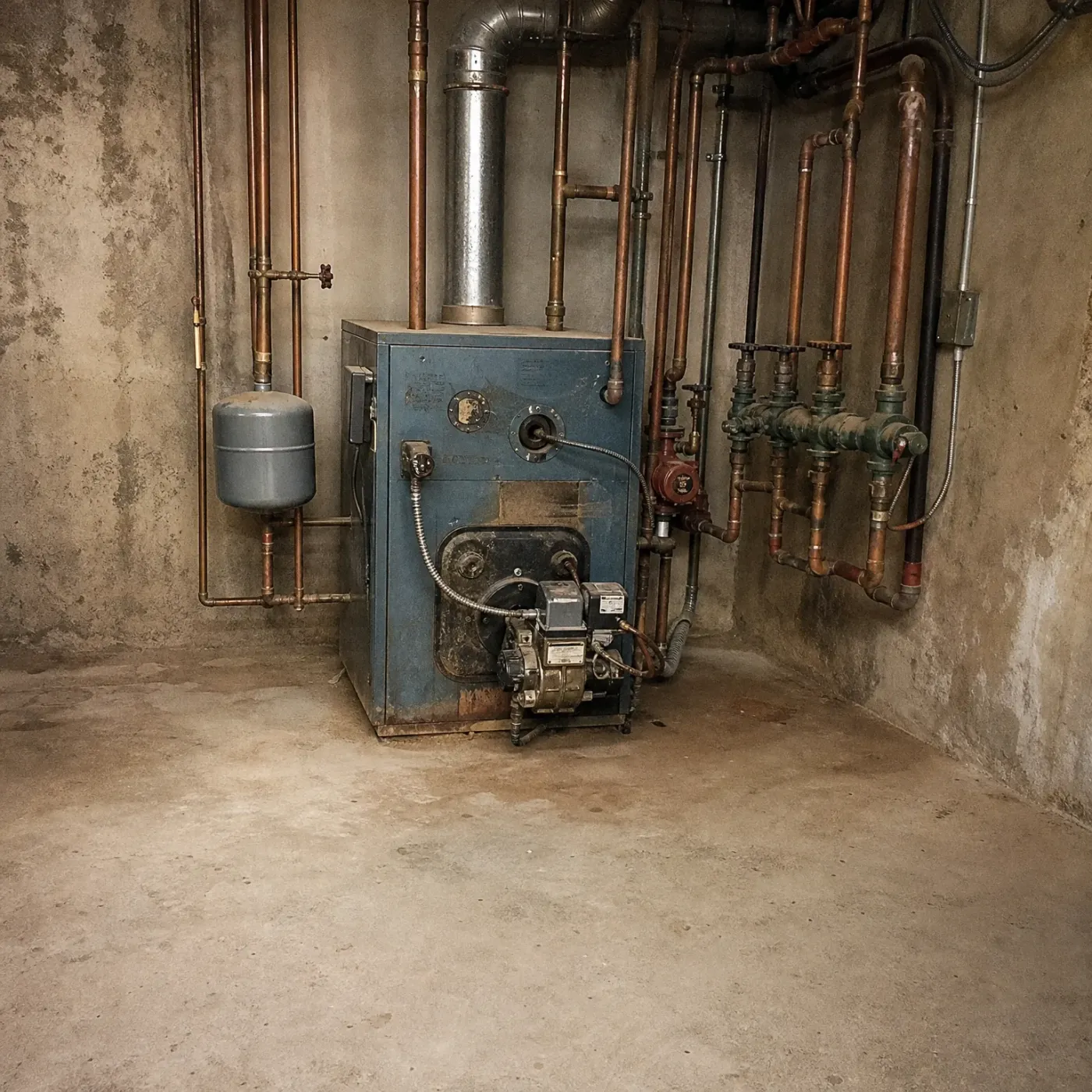
An older blue boiler with a burner unit stands in a concrete basement corner, connected to copper and steel piping, valves and a gray expansion tank on the wall.

Losing pressure

This oil-fired boiler sits on an old galvanized flue, the kind that can hide a leak at a joint for a long time before it shows on the gauge. Check the valves and circulators along the manifold first. A contractor who services boilers in Oregon all winter can trace it to the fitting that's actually letting go.

A man with grey hair and stubble in a dark sweater sits on a grey sofa indoors, looking off to the side, with a potted plant and a sunlit window behind him.
A man with gray hair, a beard and glasses, wearing a dark green sweater, sits on a gray sofa in a sunlit living room with a potted plant, table lamp and wooden sideboard behind him.
A middle-aged man with graying hair and a short beard sits on a blue sofa in a living room, looking toward a window, with a bookshelf, lamp and framed picture in the background.
A man with graying curly hair and a dark green sweater sits on a gray sofa in a sunlit living room, looking off to the side, with a framed picture, shelving, an armchair and a window with sheer curtains behind him.

Skip calling around

Your request stays with one local pro.

No charge to send it. You decide if you hire them.

Where the water actually goes

A boiler is a sealed loop, so the water in it should stay put. When it doesn't, it's usually gone out through the pressure relief valve, a small brass fitting meant to open if pressure gets too high and close again after. Over time the seat inside wears and it starts weeping even at normal pressure, a few drops at a time, down a discharge pipe you may never see. Add in a joint or a pump seal doing the same thing on a smaller scale, and the gauge drifts down over weeks without any single moment where something clearly broke.

Why air makes it worse

Pressure can also drop without a drop of water leaving, if air is getting into the loop instead. An expansion tank with a torn bladder stops absorbing the water as it heats and lets pressure swing instead of holding steady. Air that collects at a radiator or a high point in the piping takes up space water used to fill, so the system reads low even though nothing is leaking outward. A boiler technician checks both at once, because bleeding air out of a system that's also losing water just buys a few weeks before the gauge falls again.

A green oil-fired boiler with a flue pipe, burner and circulator pumps sits on a concrete pad in a basement corner, surrounded by copper piping and an expansion tank against concrete walls.
Before you get your boiler repair
A gray and blue floor-standing boiler in a basement corner, with a metal flue pipe and copper and black piping, valves, and a gray expansion tank mounted on an unfinished wood-framed wall beside a concrete wall.
After you get your boiler repair

Topping off week after week

You keep the gauge in range yourself, but the pressure keeps dropping and you still don't know if it's a slow leak, bad air, or a failing valve underneath.

Skip calling around

A local boiler tech checks it once

Someone who works on these systems all winter finds where the water or pressure is actually going and fixes that part, instead of you guessing at the filling loop.

Skip calling around

What you're probably noticing right now

The gauge sits below where it should, maybe in the red or close to it, and you've had to top it off more than once this month. Some radiators heat at the bottom but stay cold at the top. The boiler might make a gurgling sound when it kicks on, or it short-cycles, firing and shutting off sooner than it should. If you've checked under the unit or along the pipes, you may have found a damp spot or a bit of mineral crust at a joint. Left alone, a system that keeps losing pressure can end up running on low water, which puts real strain on the heat exchanger.

A woman with shoulder-length brown hair wearing a beige knit cardigan sits in a gray upholstered armchair near a window, looking off to the side with a slight smile, with bookshelves blurred in the background.
A woman with her hair in a bun holds a sleeping young child against her chest, both wrapped in a textured beige knit blanket on a sofa in a dimly lit room with a lamp, framed picture, and bookshelf behind them.

Winter nights average 32°F statewide

With overnight lows near freezing across the state all winter, your boiler is running for hours at a stretch most nights, not just a cycle here and there. More run time puts more strain on every seal and joint holding pressure, so a slow leak that might sit quiet in a milder climate shows up here as a gauge you're topping off every week.

NOAA nClimDiv 1991-2020 county normals weighted by homes

Where this leaves you

  • Losing pressure means water is leaving the loop or air is getting into it, usually through a worn valve, a weeping joint, or a faulty relief valve.
  • Topping off the gauge yourself buys time but doesn't tell you which of those three it is or whether it'll get worse by next week.
  • A boiler tech who works on these systems through an Oregon winter has seen the same failure points often enough to check them in order rather than guess.
  • Pressure that won't hold points to a cause that gets fixed once, not a gauge you keep watching all season.
  • One local, licensed contractor takes the call, so you're not fielding quotes from three different companies for the same job.
  • Once the leak or valve is found and fixed, the gauge holds where it should and the radiators heat the way they're supposed to.

Your boiler's pressure didn't drop for no reason. Water found a way out through a worn valve or a weeping joint, or the relief valve is doing its job a little too often because something upstream is pushing it to. Watching the gauge and topping it off tells you the number is low again. It doesn't tell you which part is letting go, and it doesn't stop the next drop.

That's the part a boiler tech sorts out by checking the usual points in order: the relief valve, the pump seal, the joints along the pipe runs, the expansion tank. Someone who services these systems through an Oregon winter has opened up enough of them to know where this kind of leak tends to start, so the check doesn't take guesswork. You call one local, licensed contractor, not three companies you have to explain the same gurgling radiator to. They come out, find where the water or air is getting in, and fix that one thing.

Once it's fixed, you stop thinking about the gauge. Pressure holds where the manual says it should. The radiators heat top to bottom instead of staying cold on one end. No more trips to the filling loop every few weeks hoping this time it sticks. The cause gets fixed once, and the boiler goes back to being something you don't have to check on.

Kitchen corner with cream upper cabinets, oak lower cabinets, white marble-look countertop, beige tile backsplash, a ceramic vase of greenery, a wooden cutting board and bowl, and a black-framed window at right.
Interior corner of a room with a white-framed window and wide sill, beige walls with panel molding, a wooden cabinet holding a ceramic vase with a green leafy plant, and blurred shrubs and trees outside.
A wood-framed armchair with beige cushions and a woven lumbar pillow sits in a corner beside a large window overlooking green trees, with a tall ceramic vase holding leafy branches on the left and plaster walls and wood flooring.
Interior corner with a white-framed window above a sill, beige walls with baseboard molding, a greige shaker-style cabinet with brass knobs and a potted plant on top, light wood flooring and a woven jute rug.
A dark-framed six-pane window with white trim and sill set in gray horizontal lap siding, with hydrangea shrubs below and a white column and shingled roof section at left.

No phone calls to make

The pro who reaches out is licensed in Oregon.

Fill out one form

You only hire the pro if you want to.