Send the request today and stop worrying about who to call.
A boiler running on an electric system here is not that common, which is part of why it throws people off when the radiators go cold. You check the thermostat, you check the circulator, you bleed a valve maybe, and the heat still isn't getting upstairs. Oregon winters aren't brutal but they're long and damp, and a house that depends on hot water to stay warm doesn't have a lot of patience for a boiler that's not working right.
Cold radiators usually mean something specific is wrong, not something vague. Trapped air that won't bleed out, a circulator pump that's stopped moving water, a zone valve stuck shut, low pressure on the system. Each of those has a different fix, and guessing wrong means more days with cold rooms while you try the next thing.
A contractor who works on boilers in this state knows the equipment people actually have here and what tends to fail on it after a few seasons of use. That's not the same as someone who mostly handles furnaces and takes boiler calls when they come in. The difference shows up in how fast the right part gets identified instead of the wrong one getting replaced first.
Send the request once and it goes to one licensed contractor near you, not a handful of companies competing for the job. No juggling calls, no explaining the problem five times to five different people. You explain it once, to the person who's going to be the one looking at your system.
From there it's off your plate. You're not the one tracking down who's available or who knows boilers well enough to trust with it. That part is handled. You just wait to hear back about getting the heat running again.
Why won't my radiators heat up?
You have already checked the thermostat and the circulator, maybe bled a valve, and the radiators still aren't warming up. With an electric boiler, the usual oil or gas burner problems don't apply, so you're left wondering what's actually stopping the heat from reaching the radiators in the first place.
Trapped air or a stuck zone valve is keeping hot water from reaching them
Most of the time the water never gets to the radiator at all. Air pockets in the lines block circulation, and if one or two radiators are cold while others upstairs are fine, that's usually where the air is sitting. A stuck zone valve does the same thing from a different cause, holding water back from part of the system while the boiler itself runs fine. Since electric boilers are less common here, a lot of Oregon contractors see more gas and oil systems in a given week, so finding someone who services electric units regularly matters more than it would elsewhere. That's the piece worth checking before anything else.
Boiler circulating heat
Pressure holds steady, the pump runs quiet, and every radiator in the house warms up end to end. Water moves through the loop without air pockets or blockages slowing it down. This is what a system looks like when it's doing its job.
Boiler losing heat
The pressure gauge reads low, or the needle won't hold still. One or two radiators stay cold while the rest warm up fine, which points to an airlock or a stuck valve rather than the boiler itself. Left alone, the cold spots tend to spread.
Is one radiator cold or are they all cold
Walk the house and check each radiator by hand. One cold while the rest work is usually trapped air or a closed valve, and that radiator is the only one losing heat. All of them cold, or cold upstairs while downstairs is fine, points to the circulator or the electric element itself, and that's the whole house losing heat, not just a room. You might notice the boiler cycling on and off more than it used to, or a radiator that gurgles instead of staying quiet. Left alone, a circulator that's failing won't fix itself, and the rooms that depend on it stay cold through however much of the winter it takes someone to look at it.
Air moves to the top first
Water circulates through the loop, and any air in the system rises to the highest point it can reach. That's usually an upstairs radiator or the one farthest from the boiler. The bleed valve lets that air out so water can fill the space instead. If you've only bled one radiator and others upstairs are still cold, there may be air trapped further along the loop that hasn't had a path out yet.
Sludge settles at the bottom
Over time, minerals and bits of rust inside the system settle to the bottom of radiators, where the inlet and outlet pipes are. A radiator that's cold at the top but warm at the bottom usually has sludge sitting in that lower section, blocking water from moving through. This is different from trapped air, which does the opposite: cold at the bottom, warm at the top. Flushing the radiator clears it out, but the sludge usually comes from somewhere in the loop and can return.
Winter nights average 32°F statewide
At 32°F overnight, your boiler is cycling on through most of the dark hours, not just at the coldest point of the night. A radiator that stays cold under that kind of steady demand points to trapped air or a stuck valve, not the weather asking too much of it.
NOAA nClimDiv 1991-2020 county normals weighted by homes
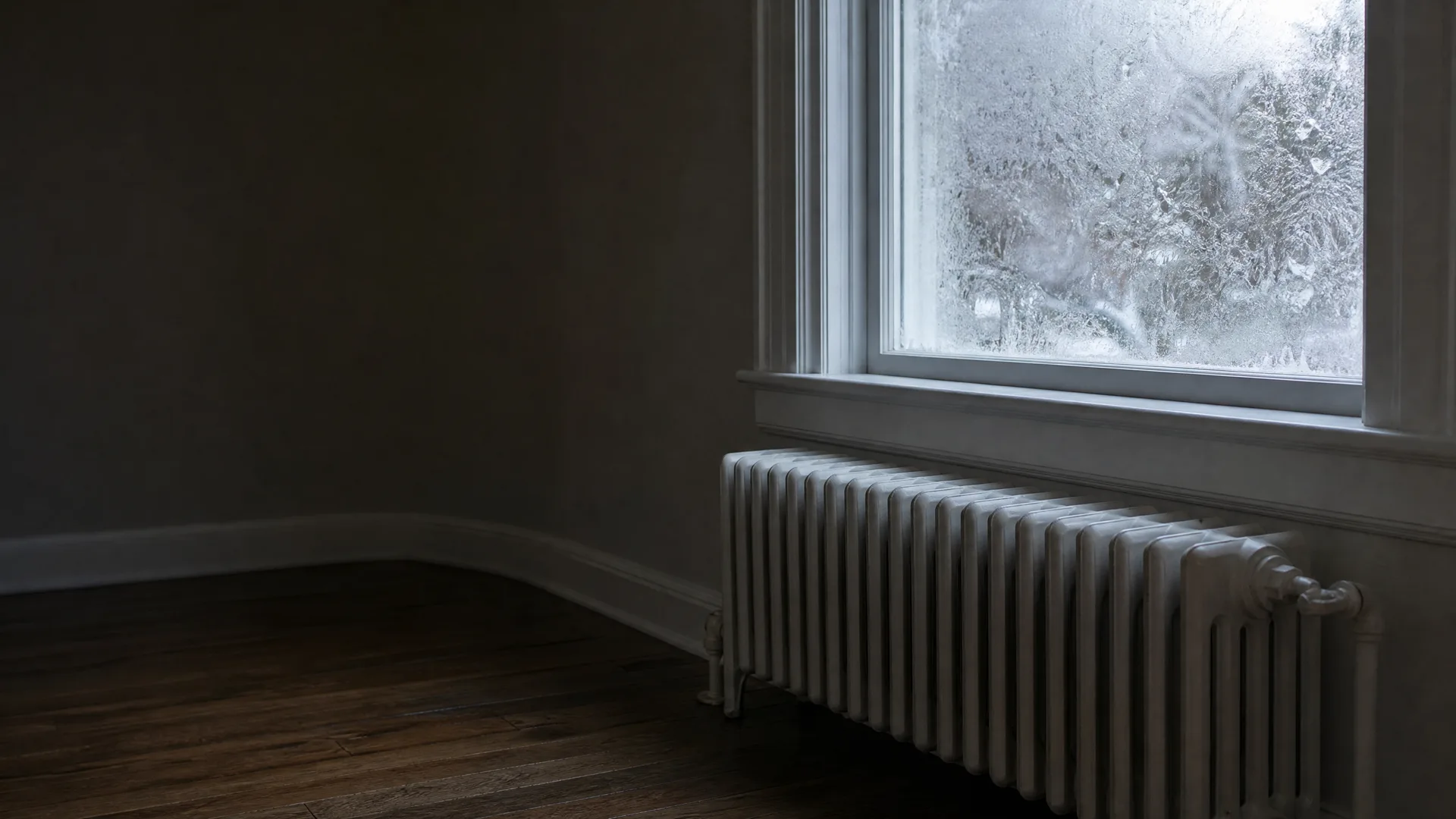
It's a little past seven and still dark outside. Frost has crept up the inside of the window glass, and under it the cast-iron radiator sits cold to the touch. You rest your palm flat on the ribs, waiting for even a little warmth, and feel nothing. Across the room your breath shows faintly in the air. The boiler is running somewhere in the house, you can hear it, but whatever heat it's making isn't reaching this rail. You crouch down and check the valve at the bottom, then straighten up again, already thinking about who you'd call about this once the sun's up and you've got a minute.
An electric boiler heats water with an element, not a burner, then a circulator pump pushes that hot water out through the supply pipe to every radiator on the loop. Each radiator has a valve on one end, usually at the bottom, that lets water in and out as the thermostat calls for heat. Inside the radiator, water fills the ribs from one side to the other, and if air is trapped in there it collects at the top and pushes the water level down, so the top of the radiator stays cold while the bottom warms. The bleed valve sits at that high point for exactly this reason. If a radiator is cold end to end instead, the shutoff valve feeding it is likely closed or stuck, which stops water from entering the loop at all. Either way, the problem is local to that radiator, not the boiler itself.
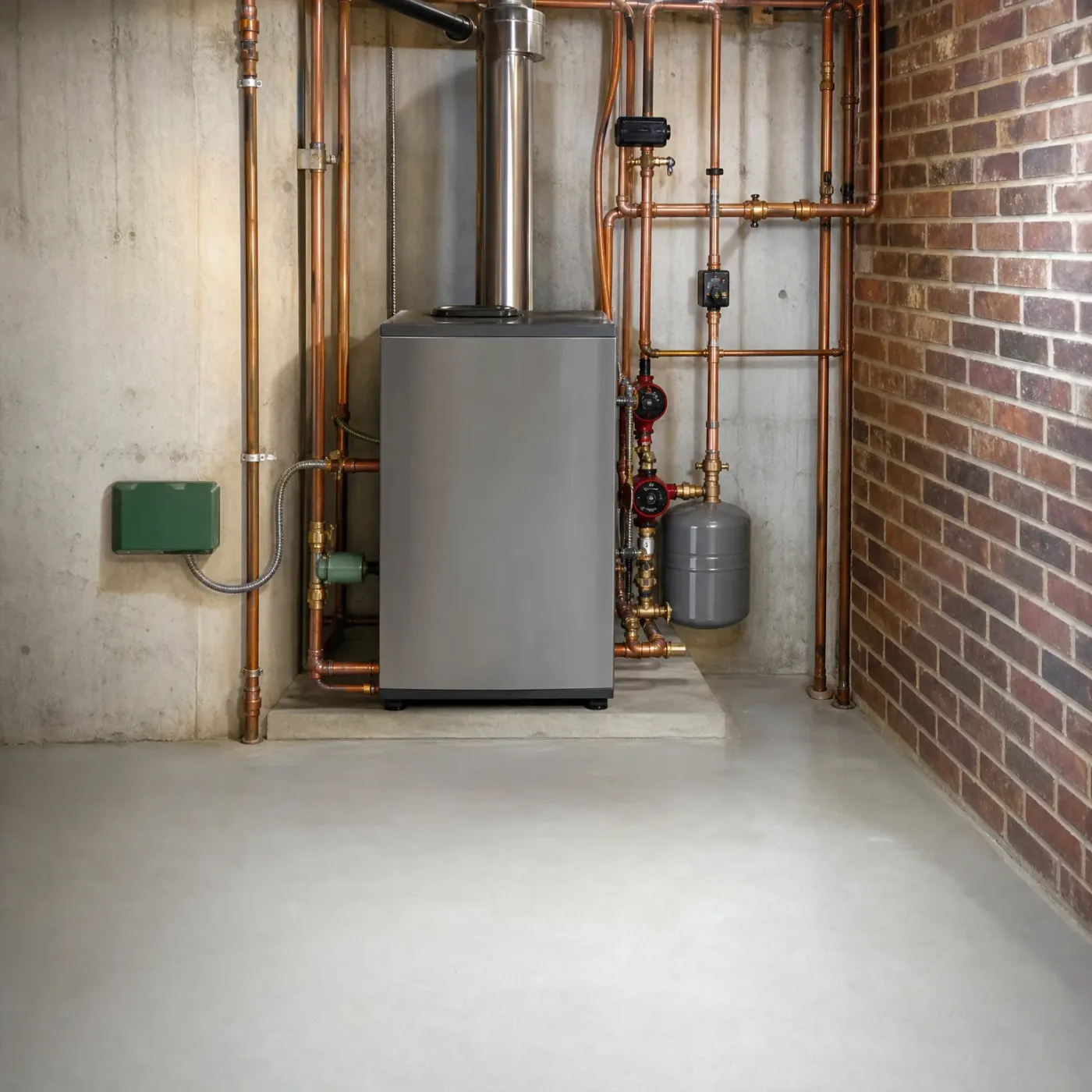
Water moves freely through clean copper lines and the pump stays quiet, so heat reaches every radiator on the loop.
Older piping and a worn pump put more strain on the system, and a radiator at the far end is the first to run cold.
Fix It Now or Bring In Help
Bleed and Clear It Yourself
A bleed key on the valve at the top of a cold radiator lets trapped air hiss out until water runs steady, often fixing one cold radiator on the spot.
This works when the rest of the house is warm and only one or two radiators are lagging behind.
It costs nothing but a few minutes and a rag for the water that follows the air out.
If the same radiator goes cold again within a few weeks, air is getting in somewhere the bleed valve won't reach.
Checking that the valve at the base of the radiator is fully open takes care of a second common cause at the same time.
Call Someone In For It
A circulator pump that's lost strength or piping that's narrowed with scale won't show itself from a bleed valve, and pushing more air out won't fix either one.
A local contractor who works on electric boilers through the wet months here knows which of these usually fails first in a house your system's age.
One contractor means one visit and one diagnosis, not a string of calls back and forth while the house stays cold.
Sending the request once means someone else is doing the work of finding the right person, and that's off your plate from there.
If more than one radiator stays cold no matter how often you bleed it, the problem is upstream of anything a bleed key can reach.
Winter nights across Oregon average 32°F, according to NOAA climate data, which is right at the edge where a boiler stops cycling occasionally and starts running steady through the night to hold the house. That steady demand doesn't cause a cold radiator, but it does expose one. A trapped air pocket or a valve that's been slow to open for months can go unnoticed in milder weather and still pass enough heat to get by. At 32°F, the boiler is leaning on every radiator to do its share, and the one with a problem falls behind first. If a radiator runs cold on a night like that, something in the loop needs attention, not the thermostat.
NOAA nClimDiv 1991-2020 county normals weighted by homes
What a Cold Radiator Tells You
A cold radiator with the rest of the house warm almost always means trapped air or a closed valve, not a failing boiler.
All radiators cold, or the upstairs cold while downstairs is fine, points to the circulator pump or the element rather than any one radiator.
Bleeding a valve clears most single cold radiators on the spot and tells you right away whether the problem is bigger than that.
At 32°F overnight your boiler runs steady through the dark hours, so a radiator staying cold under that load is a part failing, not the weather winning.
A local contractor who services electric boilers through Oregon winters has likely already seen whatever is stopping water from reaching that radiator.
Working with one licensed local contractor means one visit and one diagnosis, not a string of calls to sort through.
One cold radiator in a warm house is usually just air or a shut valve, something you can often clear yourself with a bleed key. Cold radiators throughout the house, or a cold upstairs while downstairs stays warm, is a different problem. That points to the circulator pump or the element, the parts that move heat through the whole loop rather than one branch of it. Either way, the boiler running steady on a 32°F night isn't the thing working against you. It's built to run that way through an Oregon winter. A radiator that stays cold under that kind of steady demand is telling you something specific has failed, not that the system is overmatched by the cold.
Electric boilers aren't common here, and that's exactly why it helps to have someone who already knows this equipment rather than someone learning it on your radiator. A contractor who services electric boilers through winters like this one has likely already traced this same complaint back to a stuck valve or a worn pump more times than they can count. You get matched with one licensed local contractor, not a handful of companies competing for the job. One visit, one diagnosis, someone who can look at your circulator and your radiators and tell you in person what's actually stopping the water rather than guessing from a checklist. That's the difference between chasing the problem room by room and having someone walk in already knowing where to look.
Let someone else find the pro
Only one pro gets your request, so you hear from one company.