Tell us about the job
Takes about a minute. No obligation.
Homes in Grant County, OR run heat about ten months a year, from September through June. A boiler running through a season that long puts its burner, heat exchanger, and ignition system through a high count of start-stop cycles before summer arrives. Wear on those parts is not evenly distributed: the ignition assembly and burner assembly take the brunt of every cold-morning call for heat. A contractor quoting a repair here checks those components first, because that is where accumulated load tends to show up as a cracked exchanger, a fouled burner, or a failed igniter rather than in the plumbing or controls.
Boilers in older housing tend to carry the full history of what every previous owner did, or did not do, to the system. Half the homes in Grant County, Oregon were built in 1971 or earlier (2020-2024 ACS 5-year). A contractor opening a boiler here finds corroded fittings, sediment-clogged heat exchangers, and distribution lines that have been spliced and re-spliced over the years. That history decides the repair scope. Parts for a system this vintage are still available from some suppliers but are not stocked everywhere, and the difference between a quick repair and a longer parts search depends on exactly what the opened unit contains.
The Parts of a Boiler a Contractor Checks First
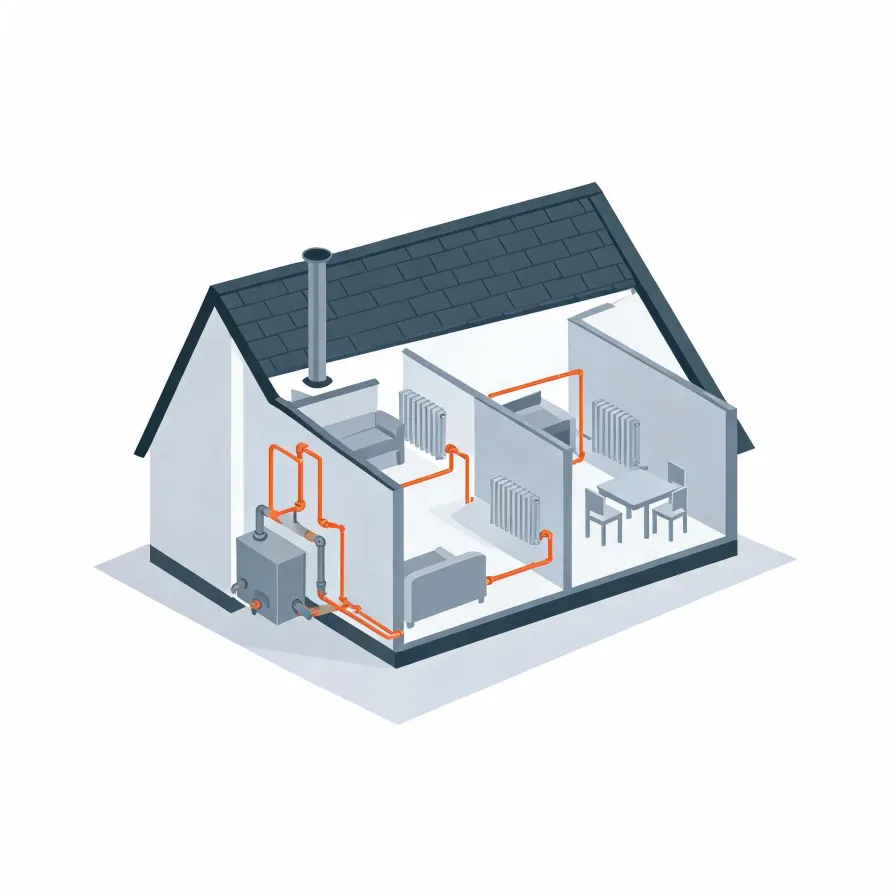
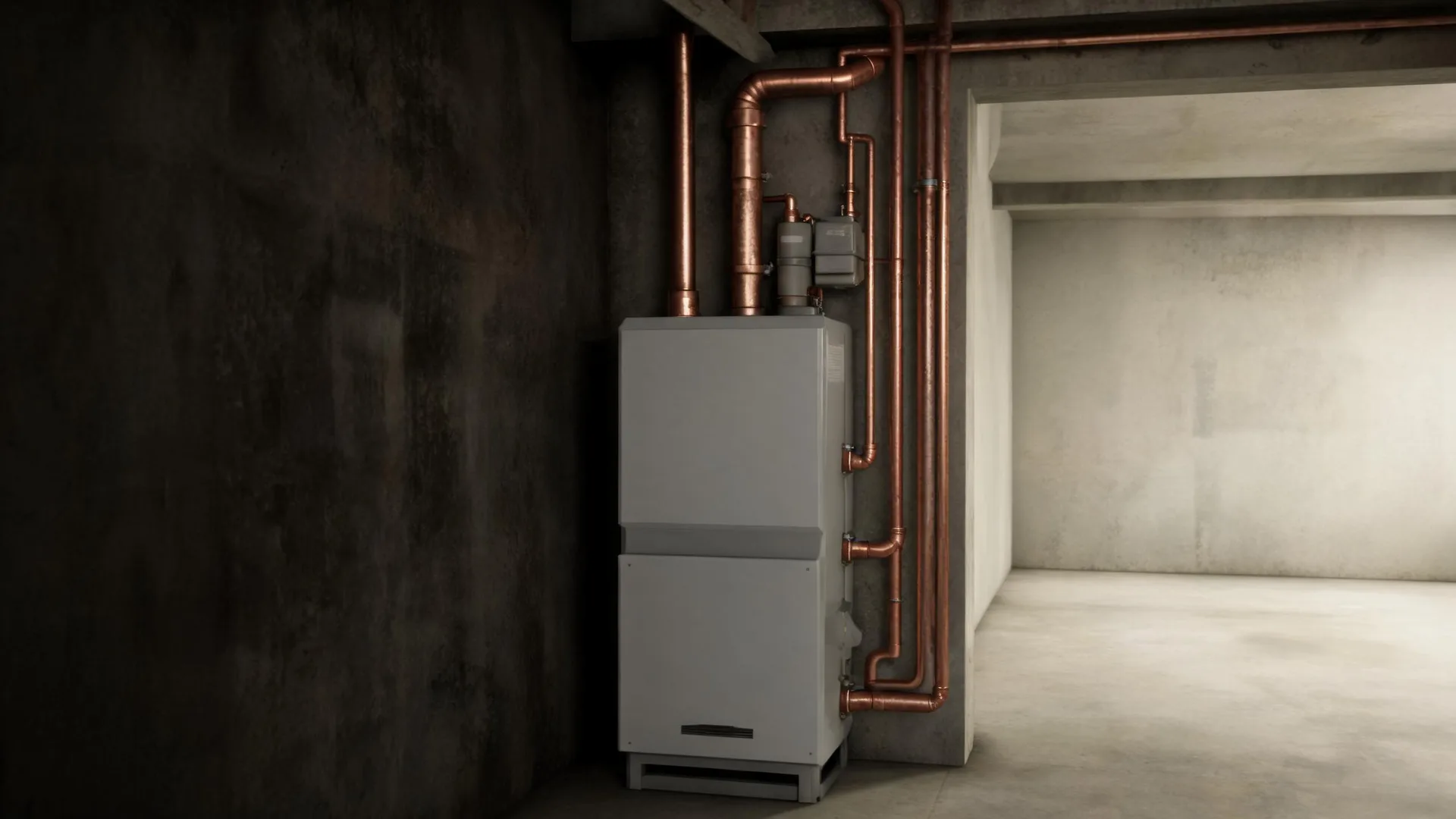
The boiler itself sits in the basement or a utility room and is the heart of the system. It heats water and pushes it out to the rest of the house. When pressure drops, the unit short-cycles, or heat stops reaching certain rooms, the boiler body, its burner, and the heat exchanger are where a contractor looks first.
Radiators and baseboards sit throughout the living space and release that heat into each room. Connecting them are supply and return pipes, along with the circulator pump that keeps water moving through the loop. A stuck pump, a blocked valve, or a weeping pipe joint each shows up differently, and tracing which one is causing the problem is a significant part of the repair work.
The drawing shows a typical boiler layout, and a licensed contractor determines which components and conditions apply to your specific home.
Get matched in Grant CountyGrant County, Oregon, by the numbers
82 severe weather events were recorded in Grant County, Oregon between 2015 and 2024.
NOAA National Centers for Environmental Information, Storm Events Database, bulk CSV export, events 2015-01-01 through 2024-12-31.Half the homes in Grant County, Oregon were built in 1971 or earlier (2020-2024 ACS 5-year).
U.S. Census Bureau, 2020-2024 American Community Survey 5-Year EstimatesGrant County, Oregon holds 4,157 housing units (2020-2024 ACS 5-year).
U.S. Census Bureau, 2020-2024 American Community Survey 5-Year EstimatesOwners occupy 76.7% of the occupied homes in Grant County, Oregon (2020-2024 ACS 5-year).
U.S. Census Bureau, 2020-2024 American Community Survey 5-Year EstimatesBoiler Repair Rules & Codes for Grant County, Oregon2 sourced standards and regulations
Contractor Rules in Grant County, Oregon
Oregon’s contractor licence does not reach casual, minor or inconsequential work on one structure where the person’s contracts total less than $1,000 — and the exemption is unavailable to anyone who advertises or signs themselves as a contractor, at any price.
Oregon requires a current Construction Contractors Board licence, with the right endorsement, to undertake, offer to undertake or bid construction work.
Severe Weather Events in Grant County
Boilers work harder when outdoor conditions push heat demand to its limits, and in Grant County that workload is shaped by local weather patterns. Knowing what this area sees year over year tells you something real about what the equipment here is asked to do.
82 severe weather events, 2015–2024. Source: NOAA National Centers for Environmental Information, Storm Events Database.