Tell us about the job
Takes about a minute. No obligation.
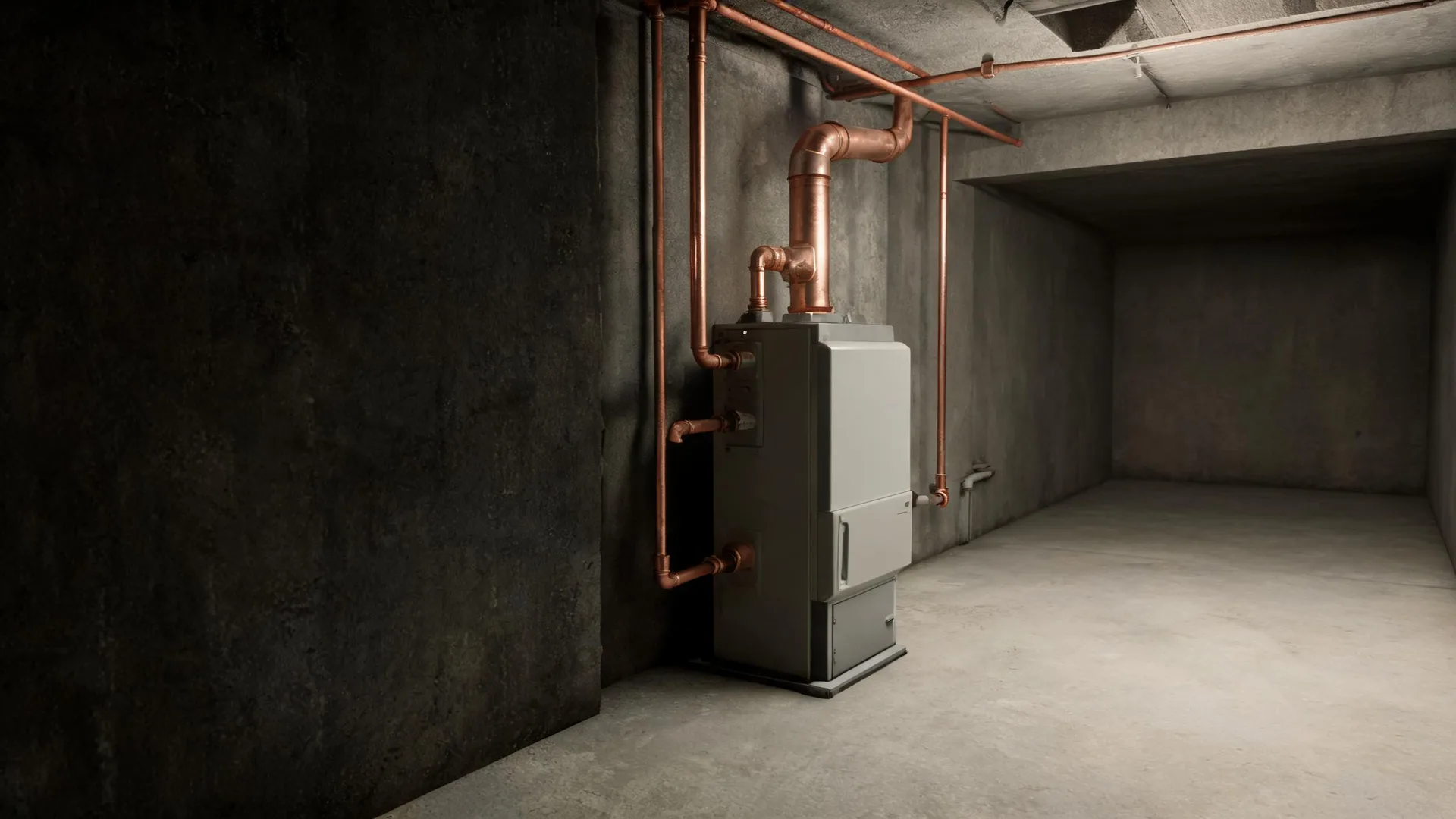
A contractor quoting boiler repair in Union County has to account for what the equipment has already been through before they can size the job. Homes in Union County, OR run heat about ten months a year, from September through June. A boiler cycling through that kind of schedule loads the burner, the heat exchanger, and the ignition system steadily, month after month, with very little idle time between runs. Wear on those parts is cumulative, and a hairline crack in a heat exchanger or a degraded ignition electrode that might hold up in easier conditions gives out sooner here. The contractor's first job is separating a targeted repair from equipment that has simply reached the end of its serviceable life.
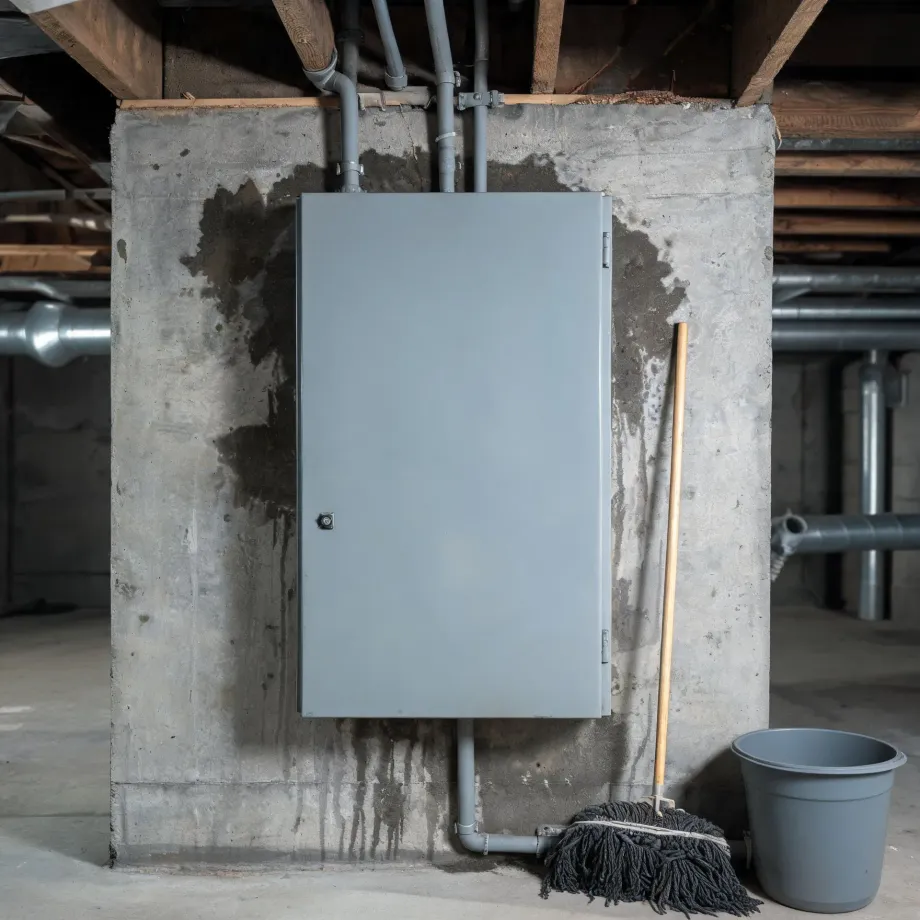
Boiler systems in a house get swapped out; the piping and zone controls laid in at original construction often stay put. Half the homes in Union County, Oregon were built in 1973 or earlier (2020-2024 ACS 5-year). A contractor opening a boiler here will find distribution hardware that was fitted around a different unit, and what that hardware actually is determines how the repair goes. A zone valve seized to an old spec, or a circulator pump matched to original pipe sizing, changes both the part ordered and the scope of the visit. The equipment in front of the contractor tells one story; what feeds and surrounds it tells another, and both have to be read before the repair is priced.
The Parts of a Boiler a Contractor Checks First
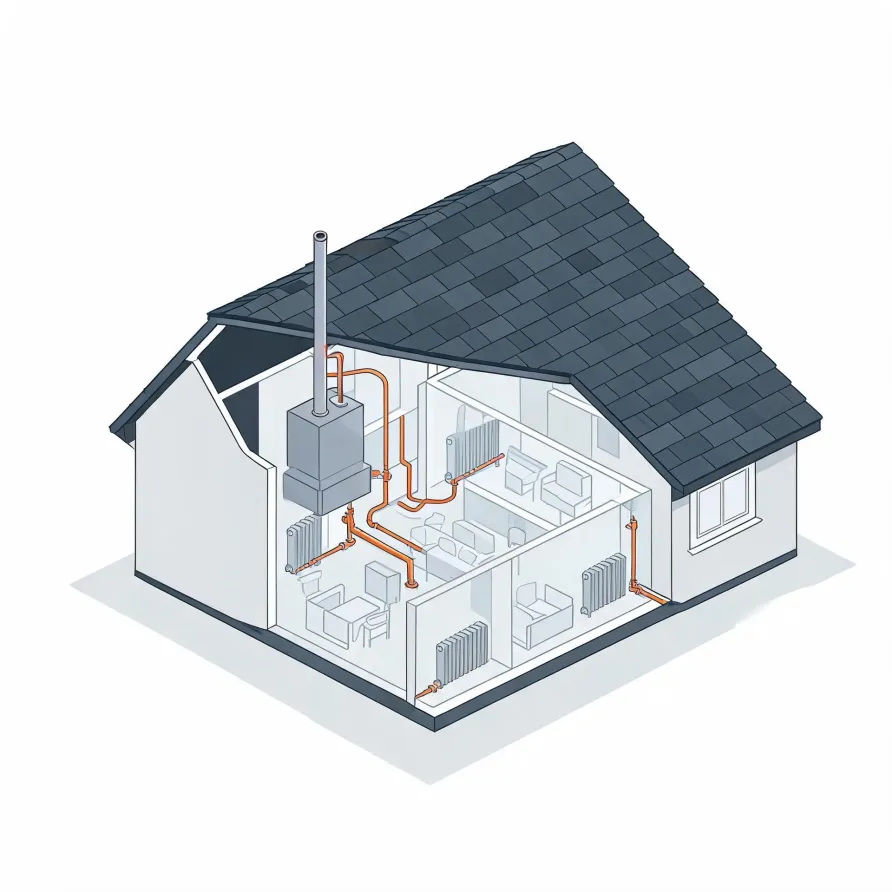
The boiler itself sits in a utility space, basement, or mechanical room and is the piece a contractor goes to immediately when heat is lost or uneven. Inside it, the heat exchanger and burner assembly are the usual suspects when something has gone wrong. A failed heat exchanger shows up as poor heat output or, in serious cases, as a safety concern the contractor will flag right away.
From the boiler, a network of pipes carries hot water or steam to radiators or baseboard units in the living spaces, and each of those terminal units can be a source of trouble on its own. The circulator pump moves water through those pipes, and when it fails the heat stops reaching the rooms even if the boiler fires normally. The expansion tank and pressure relief valve sit close to the boiler and are among the first fittings a contractor inspects.
The drawing alongside shows the general layout of a boiler system, and a licensed contractor determines which components and conditions apply to your specific house.
Get matched in Union CountyUnion County, Oregon, by the numbers
150 severe weather events were recorded in Union County, Oregon between 2015 and 2024.
NOAA National Centers for Environmental Information, Storm Events Database, bulk CSV export, events 2015-01-01 through 2024-12-31.Half the homes in Union County, Oregon were built in 1973 or earlier (2020-2024 ACS 5-year).
U.S. Census Bureau, 2020-2024 American Community Survey 5-Year EstimatesUnion County, Oregon holds 11,829 housing units (2020-2024 ACS 5-year).
U.S. Census Bureau, 2020-2024 American Community Survey 5-Year EstimatesOwners occupy 65.5% of the occupied homes in Union County, Oregon (2020-2024 ACS 5-year).
U.S. Census Bureau, 2020-2024 American Community Survey 5-Year EstimatesBoiler Repair Rules & Standards on Record for Union County, Oregon2 codes, standards, and regulations
Licensing and Legal Requirements in Union County, Oregon
Oregon’s contractor licence does not reach casual, minor or inconsequential work on one structure where the person’s contracts total less than $1,000 — and the exemption is unavailable to anyone who advertises or signs themselves as a contractor, at any price.
Oregon requires a current Construction Contractors Board licence, with the right endorsement, to undertake, offer to undertake or bid construction work.
Severe Weather Events in Union County
Hard weather puts hours on a boiler faster than ordinary use does. How often conditions turn extreme here shapes how much repair work the equipment in this area actually sees.
150 severe weather events, 2015–2024. Source: NOAA National Centers for Environmental Information, Storm Events Database.