Tell us about the job
Takes about a minute. No obligation.
Homes in Malheur County, OR run heat about nine months a year, from September through May. A boiler working through that kind of heating load puts its heaviest wear on the burner assembly and the ignition system, because those are the parts that cycle every time the thermostat calls for heat. By the time a repair call comes in, a contractor checking a Malheur County boiler starts with those components, not the pipes or the pressure relief valve. The heat exchanger also absorbs years of thermal stress and deserves close inspection once the burner condition is known.
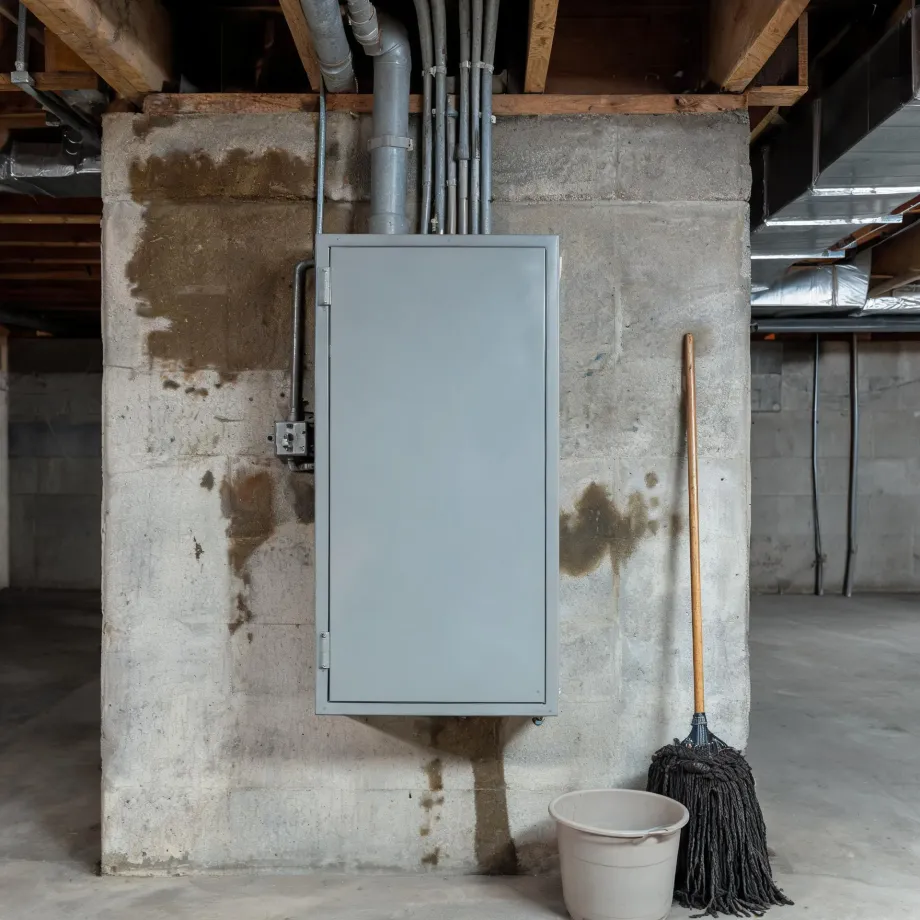
Boilers in houses like these have often outlasted two or three fuel source decisions, and what sits in a mechanical room today reflects those choices more than the original design of the house. Half the homes in Malheur County, Oregon were built in 1974 or earlier (2020-2024 ACS 5-year). A contractor who opens a boiler here frequently finds a heat exchanger carrying years of sediment buildup, controls that were retrofitted rather than factory-installed, and expansion tanks that have lost their charge. Parts availability for equipment that age is not a given. What the opened unit actually contains determines whether a repair is a straight parts swap or a longer conversation about what components are still made.
The Parts of a Boiler a Contractor Checks First
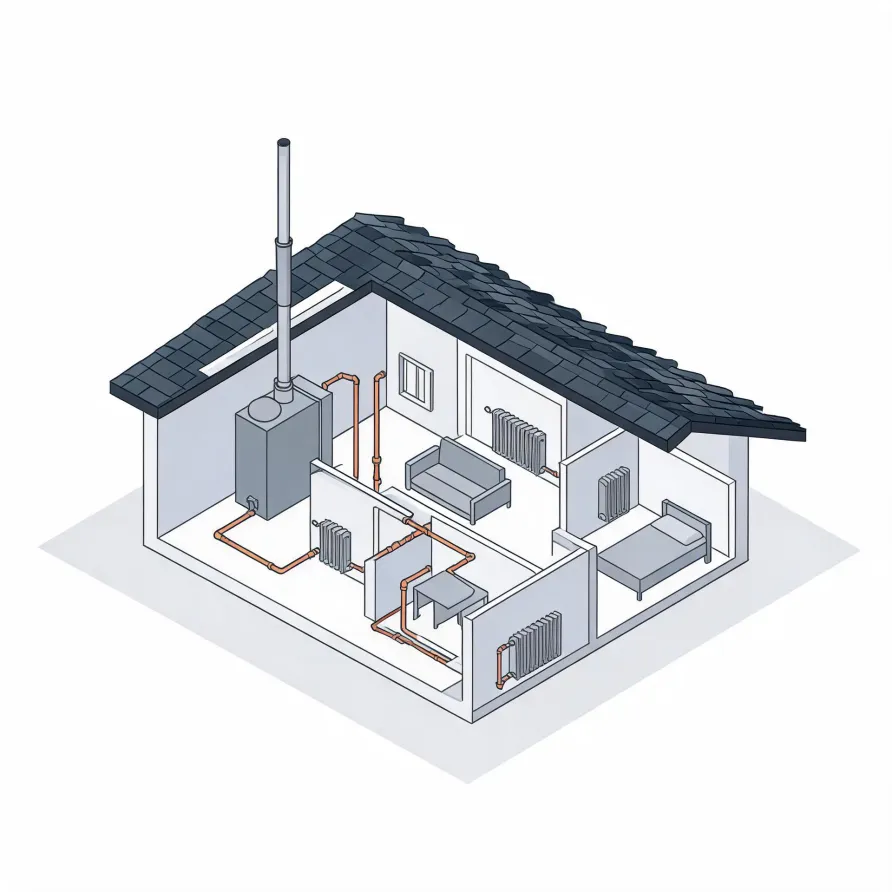
The boiler itself sits in a utility area, basement, or mechanical room and is where water gets heated before it moves through the house. When heat is uneven, the system runs too long, or the unit fails to fire at all, this is where a contractor starts. The heat exchanger inside it is a common source of trouble.
From the boiler, pipes carry hot water to radiators or baseboards in each room, and those terminal units are where a contractor looks when a single zone is cold while others are fine. The circulator pump, which drives water through those pipes, and the expansion tank, which sits on or near the boiler, are also points a contractor checks when pressure or flow is off.
The drawing shows a typical boiler layout, and a licensed contractor determines which components and conditions apply to your specific home.
Get matched in Malheur CountyMalheur County, by the record
35 severe weather events were recorded in Malheur County, Oregon between 2015 and 2024.
NOAA National Centers for Environmental Information, Storm Events Database, bulk CSV export, events 2015-01-01 through 2024-12-31.Half the homes in Malheur County, Oregon were built in 1974 or earlier (2020-2024 ACS 5-year).
U.S. Census Bureau, 2020-2024 American Community Survey 5-Year EstimatesMalheur County, Oregon holds 11,716 housing units (2020-2024 ACS 5-year).
U.S. Census Bureau, 2020-2024 American Community Survey 5-Year EstimatesOwners occupy 63.2% of the occupied homes in Malheur County, Oregon (2020-2024 ACS 5-year).
U.S. Census Bureau, 2020-2024 American Community Survey 5-Year EstimatesCodes & Standards Governing Boiler and HVAC Repair in Malheur County, Oregon2 sourced rules and standards
Licensing and Legal Requirements in Malheur County, Oregon
Oregon’s contractor licence does not reach casual, minor or inconsequential work on one structure where the person’s contracts total less than $1,000 — and the exemption is unavailable to anyone who advertises or signs themselves as a contractor, at any price.
Oregon requires a current Construction Contractors Board licence, with the right endorsement, to undertake, offer to undertake or bid construction work.
Severe Weather Events in Malheur County
Extreme weather puts heating equipment under stress it was never designed to run at continuously. How hard a boiler works over its life is partly a local question, and the record here shapes what repair needs look like.
35 severe weather events, 2015–2024. Source: NOAA National Centers for Environmental Information, Storm Events Database.